


The ethics of Lean
FEATURE – Silicon Valley’s dominance-driven model prioritizes scale over responsibility, risking societal harm. Conversely, Lean’s human-centered approach reframes business as community-building, long-term value creation, and shared learning.
Words: Michael Ballé
Silicon Valley figures, such as Peter Thiel and other aggressive technology investors, have managed to disrupt the post-war industrial outlook that emphasized social responsibility or community. In this new zeitgeist, the primary goal of a technology company is to achieve overwhelming market dominance. Markets are seen as competitions in which only the winner truly matters, because digital platforms often scale globally and reward monopoly or near-monopoly outcomes. With such a mindset, the central strategic objective is to move extremely quickly, capture network effects before competitors can react, and lock in control of the market. Once a company becomes the dominant platform, it can shape rules, pricing, and user experience in ways that would not be possible in a competitive market.
“Move fast and break things” is a mantra that reflects the belief that speed and scale are more important than caution (innovation requires breaking existing structures) and that regulation, social concerns, or thinking about long-term consequences only slow growth down. Venture capital culture reinforces this approach by funding companies that pursue rapid expansion even if they operate at losses for years. The assumption is that once a platform reaches sufficient scale, it can convert that dominance into immense profits. Under this logic, early-stage externalities—such as labor disruptions, privacy risks, environmental impacts, or social consequences—are often treated as secondary issues that can be addressed later, if at all.
Another feature of this worldview is a willingness to reshape or bypass existing institutions. Many tech founders and investors see themselves as disruptive outsiders challenging inefficient systems, such as traditional media, transportation, finance, or retail. While this disruption can produce genuine innovation, it often relies on forms of economic expropriation. Platforms may extract value from workers, creators, or users while capturing the majority of profits themselves. For example, gig platforms can shift risks onto workers while controlling pricing and access to customers, and digital platforms can monetize user data without giving users meaningful ownership or control. Technological power is used to concentrate economic leverage.
As a result, as persons-in-the-street, we get “enshittified,” a term coined to describe the lifecycle of many digital platforms. Early on, platforms provide generous benefits to users in order to grow quickly and attract attention. Once users and businesses become dependent on the platform, the incentives change. The platform begins prioritizing revenue extraction—through advertising, fees, algorithmic manipulation, or reduced service quality—because the network effects make it difficult for participants to leave. Over time, the interests of users, workers, and partners may be subordinated to the platform’s financial optimization.
Over time, the fear is that this model will drive us down the path of a broader loss of personal autonomy and economic freedom. As digital platforms become central infrastructure for communication, commerce, and social life, they gain the ability to shape what information people see, how markets operate, and how individuals earn income. When a small number of companies control these systems, they can accumulate unprecedented influence over both economic and social activity. The concern is not simply about profit, but about the concentration of power in privately controlled digital networks that mediate every-day life.
On the other hand, Musk fans and supporters of the Silicon Valley approach would argue that this worldview has also produced extraordinary innovation, economic growth, and technological progress—which is undeniable. So, does the pursuit of rapid dominance and scale ultimately serve society or undermine competition, community, and individual freedom over the long term?
In the late 19th century, the founding father of Lean Thinking, Sakichi Toyoda, was a committed Buddhist, a follower of the Nichiren-shu school, which emphasizes hotoku—literally, “repay the indebtedness” by recognizing the debt owed by man to gods, nature, ancestors, emperor, and parents, and doing what one could to give back. He approached business with a clear and coherent worldview that shaped both his inventions and the culture of the company that eventually became Toyota. He did not see business merely as a mechanism for generating profit. Instead, he believed it should be a constructive force that improves human life. This outlook came from his early experiences observing the hardship of manual labor in textile production, particularly the work his mother performed on traditional looms. His drive to invent automatic looms was, therefore, motivated by a desire to reduce human burden and improve working conditions. In this sense, technology and enterprise were tools to solve real problems faced by ordinary people. Business, in his view, had meaning only if it contributed to making life easier, more productive, and more dignified.
In this perpective, work and enterprise should serve society rather than exist solely for profit. Profit was necessary because it allowed companies to survive, invest, and innovate, but it was not the ultimate goal. Toyoda believed that businesses should see themselves as participants in the broader social system. Their activities should contribute to social welfare, economic development, and collective progress. When a company focuses only on extracting profit, it loses sight of its responsibility to the society that sustains it. By contrast, when a company aims to contribute to the common good, profitability tends to follow as a natural consequence of creating genuine value.
Another central part of Toyoda’s outlook was a deep commitment to continuous learning and innovation. He believed that progress comes from observing the world carefully, staying curious, and experimenting relentlessly. This meant paying attention not only to one’s immediate environment, but also to developments in the wider world. Toyoda himself studied foreign technologies, traveled three times to the United States to understand industrial developments, and constantly refined his inventions through trial and error. The attitude he embodied was one of intellectual openness: look beyond the walls of the factory, see what is happening elsewhere, learn from it, and test new ideas. Innovation was not a single breakthrough, but an ongoing process of improvement driven by curiosity and experimentation.
Finally, Toyoda believed that companies should function as human communities rather than purely transactional workplaces. A business should resemble a family-like environment in which people respect one another, accept their differences, and support each other’s success. Work is not simply a contract between employer and employee, but a shared effort to achieve meaningful goals together. In such a community, individuals bring different skills, perspectives, and experiences, and these differences strengthen the organization rather than divide it. Cooperation, mutual respect, and collective responsibility allow people to grow and contribute more fully than they would in a workplace defined only by transactions and hierarchy.
Taken together, these ideas formed the philosophical foundation for Sakichi Toyoda’s approach to innovation and enterprise. He believed that businesses exist to improve people’s lives, that profit should support societal contribution rather than replace it, that continuous learning and experimentation drive progress, and that companies thrive when they are communities of people working together rather than impersonal machines focused solely on financial outcomes. These principles shaped the early culture of Toyota and continue to influence the company’s philosophy today.
Many lean transformations falter because organizations attempt to adopt the visible instruments of Lean while leaving the underlying culture untouched. Companies introduce kanban boards, value stream maps, improvement workshops, and problem-solving routines, yet these tools are systematically interpreted to fit the habits, incentives, and assumptions that already govern the organization. Instead of transforming the enterprise, the tools are absorbed into the existing system. Lean becomes a set of techniques rather than a shift in how the company understands work. The outward appearance changes, but the internal logic remains the same.
Tools are the levers of change, but not its impetus. True changes in trajectory begin with culture, not tools. Culture defines what people consider important, what attitudes are encouraged or punished, and what leaders truly choose when difficult choices arise. When culture evolves, it alters the way people think about their work: what counts as a problem, what constitutes good performance, and how responsibility should be shared. This shift in thinking gradually reshapes every-day decisions. Each day thousands of small choices are made in a company—how to respond to a defect, whether to investigate a customer complaint deeply or dismiss it, whether to share knowledge or guard it, whether to experiment or stay within the familiar. Over time, these countless small decisions accumulate and bend the arc of the organization’s future. The direction of a company is not determined by its strategic declarations but by the pattern of decisions it makes in ordinary moments.
When the cultural foundations of the Toyota Management System are not understood, lean tools often end up reinforcing the existing organizational mindset. In companies where management already prizes short-term financial indicators above all else, lean methods may simply become mechanisms for squeezing additional productivity from workers or accelerating cost reductions. In environments dominated by hierarchical command and control, improvement tools may be repurposed as instruments of monitoring and compliance rather than learning. Instead of opening a space for reflection, curiosity, and problem solving, the tools are used to strengthen the prevailing order. The organization continues along its familiar path, only with a new vocabulary.
For this reason, success with Lean requires confronting a deeper and more unsettling question: what do we mean by success in the first place? In many contemporary business environments, success is defined as rapid growth accompanied by accounting profitability, even if that growth is sustained by financial leverage, cost extraction, or the expectation that the company will eventually be sold to a larger player. Under this interpretation, speed, scale, and pressure for short-term returns become the dominant measures of achievement.
The alternative view, which lies closer to the vision that shaped the Toyota system in its formative years, defines success in more enduring terms. A business exists to help people through the work it performs. It creates value by developing the capabilities of its members and by contributing something meaningful to society. In such organizations, today’s value is delivered through knowledge, discipline, and cooperation. Through the patient cultivation of processes that allow people to solve problems together. Tomorrow’s value arises from curiosity, experimentation, and the courage to explore new ideas grounded in what the organization has learned.
Lean is not primarily a collection of operational tools but a way of orienting a company toward the future. It asks organizations to build communities of practice rather than machines for extraction. It invites them to pursue progress not through shortcuts but through the steady development of human capability, shared understanding, and responsible innovation. Only when these cultural commitments are embraced do the familiar tools of Lean begin to reveal their true power.
Yes, we seek to reduce the waste that inevitably accumulates in every human activity. No process, however well designed, escapes the small inefficiencies, unnecessary misunderstandings, delays, errors and conflicts that consume time and energy. To improve our work, therefore, means to see this waste more clearly and to reduce it patiently. But the intention is not to achieve this by squeezing ever more effort from people, by tightening the screws of productivity until workers are forced to compensate for the weaknesses of the system through sheer exertion. That approach merely hides waste rather than eliminating it, shifting the burden of poor processes onto the shoulders of those who most struggle through them each day. The aim is something quite different: to learn to recognize the waste that appear as unnecessary mistakes, avoidable rework, repeated corrections, and endless redos that arise when thinking remains superficial and the conditions of work are not properly understood. Instead of simply measuring performance and urging people to go faster, the effort is to look carefully at how the work actually unfolds, to identify the parameters that truly govern quality and flow, and to bring those parameters under thoughtful control. By doing so, the organization gradually learns to work more smoothly and more seamlessly. The friction diminishes not because people are pushed harder, but because the work itself becomes clearer, more coherent, and more stable. In such an environment, workers are no longer left to wrestle alone with the daily churn of events and the mess of the workplace. The system then supports them rather than resist them, and improvement emerges from shared understanding rather than from pressure. Through this patient attention to how work really happens, waste recedes, not through force, but through learning.
To change an organization in any lasting sense, one must begin in a less obvious place: the mind. Organizations do not change because charts are redrawn or procedures rewritten. They change because the people who inhabit them begin to see the world differently. Every process, every rule, every strategic choice is ultimately the outward expression of how individuals interpret their work, their responsibilities, and the purpose of the enterprise itself. As long as these underlying interpretations remain untouched, reforms will remain superficial. The organization absorbs them, digests them, and quietly returns to its habitual ways. Transformation does not begin with structure, but with a shift in understanding.
Having changed one’s mind, one must endeavor to change the collective. An organization moves only when its members agree—explicitly or implicitly—to follow a different set of rules. New ways of working must be articulated and embodied in daily practice: how problems are approached, how decisions are made, how people cooperate across boundaries, how success is recognized and failure treated as an opportunity to learn. These shared expectations gradually solidify into a new culture. Culture, after all, is nothing mystical; it is simply the accumulation of the behaviors a group repeats and the principles it quietly enforces.
Yet the first step remains the most demanding. To change one’s mind requires both foresight and courage. Foresight is the ability to glimpse a different horizon when the familiar landscape seems perfectly adequate. Courage is the willingness to question convictions that may have guided one’s career, one’s training, even one’s sense of competence. Many of the assumptions that shape business life are so deeply embedded that they pass for common sense. They appear self-evident: that competition must be ruthless, that speed is always superior to patience, that profit alone defines success, that efficiency is achieved by control rather than understanding.
Is success merely the rapid accumulation of profit, the spectacle of growth, the satisfaction of outperforming competitors quarter after quarter? Or does success lie in something more enduring—the creation of work that genuinely helps people, the patient cultivation of human capability, the building of communities that learn together and innovate over time? When the meaning of success changes, the logic of decisions changes with it. And when decisions change, day after day, the organization itself begins to move along a different path. Thus, the transformation of an enterprise begins not with a program, a tool, or a proclamation, but with daring to reconsider what had long seemed obvious. From that reconsideration emerges a new way of thinking. From that new thinking, a different pattern of deciding and acting. And from what we see and do every day, slowly but unmistakably, a different future.
THE AUTHOR

Read more

REVIEW - Michael and Freddy Ballé’s new novel, which came out this week, will help readers to understand what it really means to be a lean leader and respect people.

MY AHA MOMENTS – Opening a reflective new series on his lean “aha” moments, the author recalls discovering the power of gemba observation to reveal hidden capacity without investment.
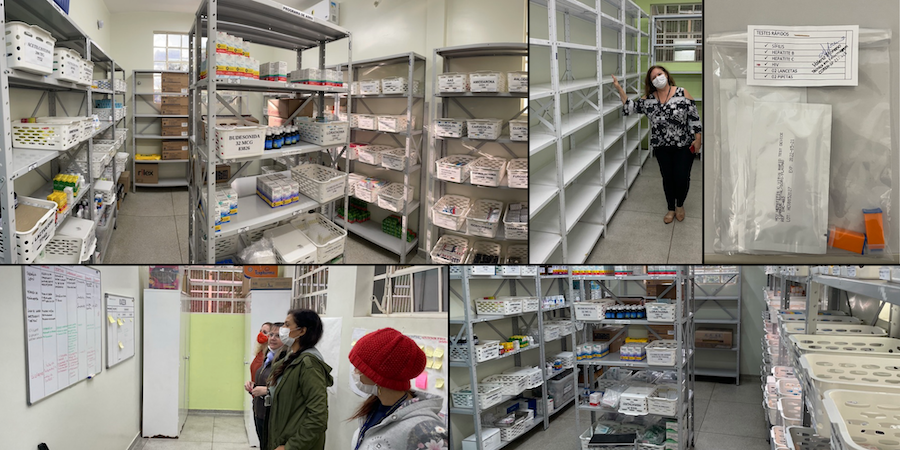
FEATURE – In this article, we hear about how the lean successes of one hospital inspired an entire healthcare authority to introduce changes to their processes.
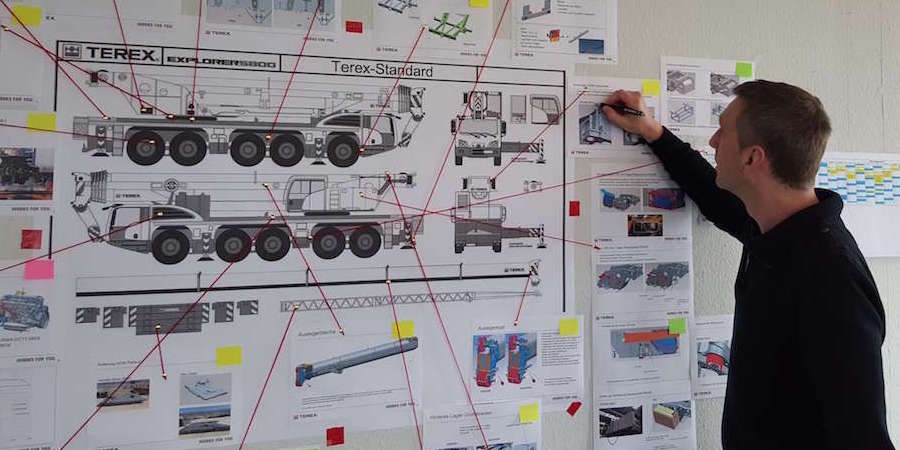
NOTES FROM THE GEMBA – In the past 15 months Terex Cranes has successfully initiated a lean transformation. Follow Catherine Chabiron on her gemba walk to see what this large company is doing to put learning at the heart of its activities.
Read more

FEATURE – This student’s research confirms that lean efforts stall when culture lags. Case evidence shows fear, poor communication and top-down tools breed resistance, but participatory leadership fosters resilient lasting outcomes.
FEATURE – The Lean Global Network just published a new book by Kiyoshi “Nate” Furuta sharing compelling examples of how Toyota principles and culture can be effectively spread to new environments.

FEATURE – We all want to create a lean culture in our organizations, but what makes cultural change possible? And, more importantly, what are the leadership behaviors that enable a new culture to take root?

INTERVIEW – During a chat with Planet Lean, Darril Wilburn explains why courage and humility are necessary elements to establish a culture based on continuous improvement.