


Truth conquers all
FEATURE – Can lean relieve some of the pain and fear people experience in this crazy world? It can, says the author, because amid so much noise lean carries one truth.
Words: Sharon Visser
We have entered a period in which the masks of Covid have slowly been removed only to reveal a calamitous world. So many broken and forgotten processes, so much fear, so much pain, so much trauma.
Indeed, this is a hurting world turning on itself, filled with a paralyzing and polarizing distrust stemming from greed and, increasingly, by the powerful algorithms helping the media (and social media platforms) to spread bad news that promotes fear.
Why fear? Well, it seems that fear is the most effective way to sell whatever needs to be sold. The old newspaper saying “Bad news is good news” has not gone away; it’s just found a better way to feed the monster.
The world has always had periods of crisis and deep polarization, but we have never been quite as aware of it as we are now. Never before have so many lies been able to build false truths in a matter of nanoseconds. Never before has it been so easy to say whatever we like without having to look a person in the eye and see the pain we cause them. Never before have so many people felt quite as alone and insecure as they do now.
So where does it leave us, as lean practitioners?
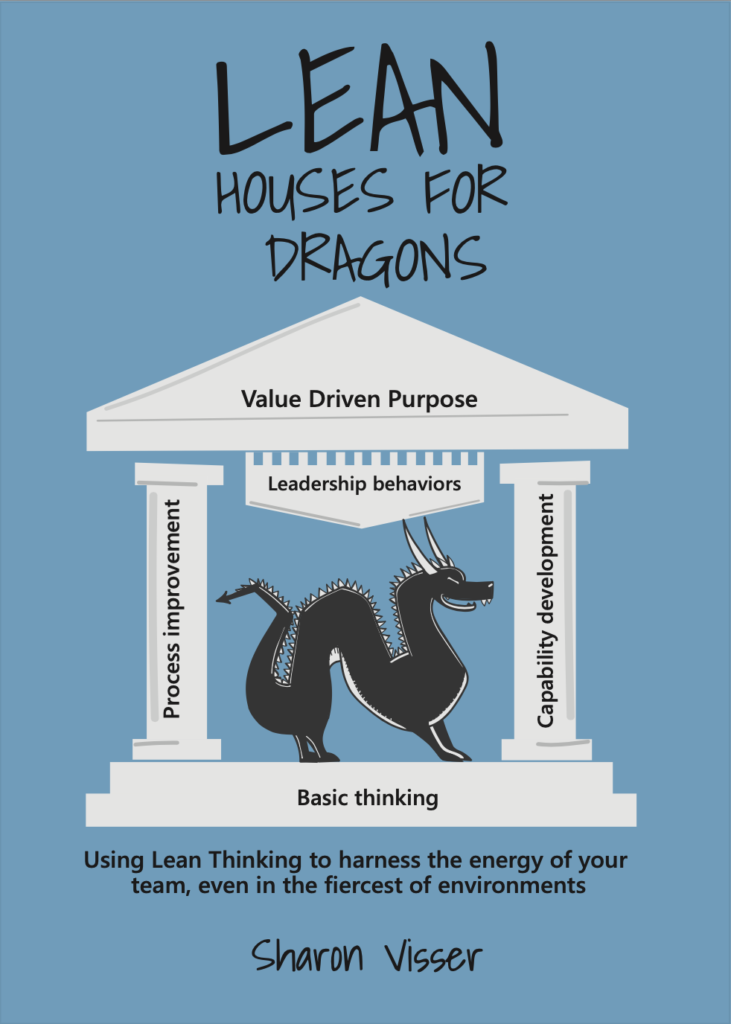
Lean alone cannot solve the complex problems of the world, but it can certainly do its part, by creating stability in the many workplaces where people have lost their way.
Why is this more important than ever? Because, if we can help stabilize the processes, we will be able to somehow stabilize the lives of those working within those processes. Doing one’s job in a place where, enabled by standard work and job instructions, processes become predictable makes for a safe environment. This stability, in turn, helps the brain to calm down and think creatively, so that people can focus on problem solving once again. A stable workplace can cancel out the noise of the outside world and help people focus on what must be done. This can help us heal ourselves and, therefore, the world. [Sharon has written extensively on the topic of lean as an antidote to fear. For more insights from her, check out her book Lean Houses for Dragons.]
For this very reason, it is important that we lean thinkers continue to emphasize the importance of having people write their standard work and design their processes. By now, we have seen and felt the shortcomings of operation manuals that are created by everyone but the people doing the work. We know that they do nothing to help a worker through a crisis. Instead, we can give people the means and responsibility to become owners of their work, and that has to bring them some respite in the midst of so much commotion.
KINDNESS IS THE KEY
If there is anything we have learnt over the last three years is that, in the “post-truth world”, when a person really believes they are right, facts will not change their thinking. Luckily, Lean Thinking provides an antidote to this: the only thing that can change their mind is closer relationships with others (helping people to understand how their work impacts their peers), experiences (learning on the job to find problems) and, eventually, the consequences of their actions (be them improvements or lack thereof).
It is a responsibility of lean leaders to build these connections and develop the experiments and experiences through which people can learn every day.
Before we can do this, however, we need to do some self-reflection. We all have had our own trauma and need to recognize our role in “feeding the monster” – for instance, contributing to an unsafe, toxic environment riddled with problems.
We need to reflect on where we have personally missed the mark and vow to do better. Sometimes, to fix what’s broken will require us to be tolerant and choose connections over being right. This will not make us wrong; it will make us kinder, stronger and part of the healing of the world.
Pour a little love on it! It’s not going to be easy, but it’s the only way forward. If we want to contribute to fixing our broken world, we must start by taking responsibility and finding a modus operandi in which we can build experiences using experiments showing people what the true situation is like.
This is a time for us to have faith in Lean Thinking and let it speak with its own voice to the people doing the work. When this happens, they will learn that the truth conquers all things. Better still, they will know how to find that truth – both at work and within themselves.
We have the power to do something about the dire situation in which our broken world finds itself, and you know what? We owe it to our children.
THE AUTHOR

Read more
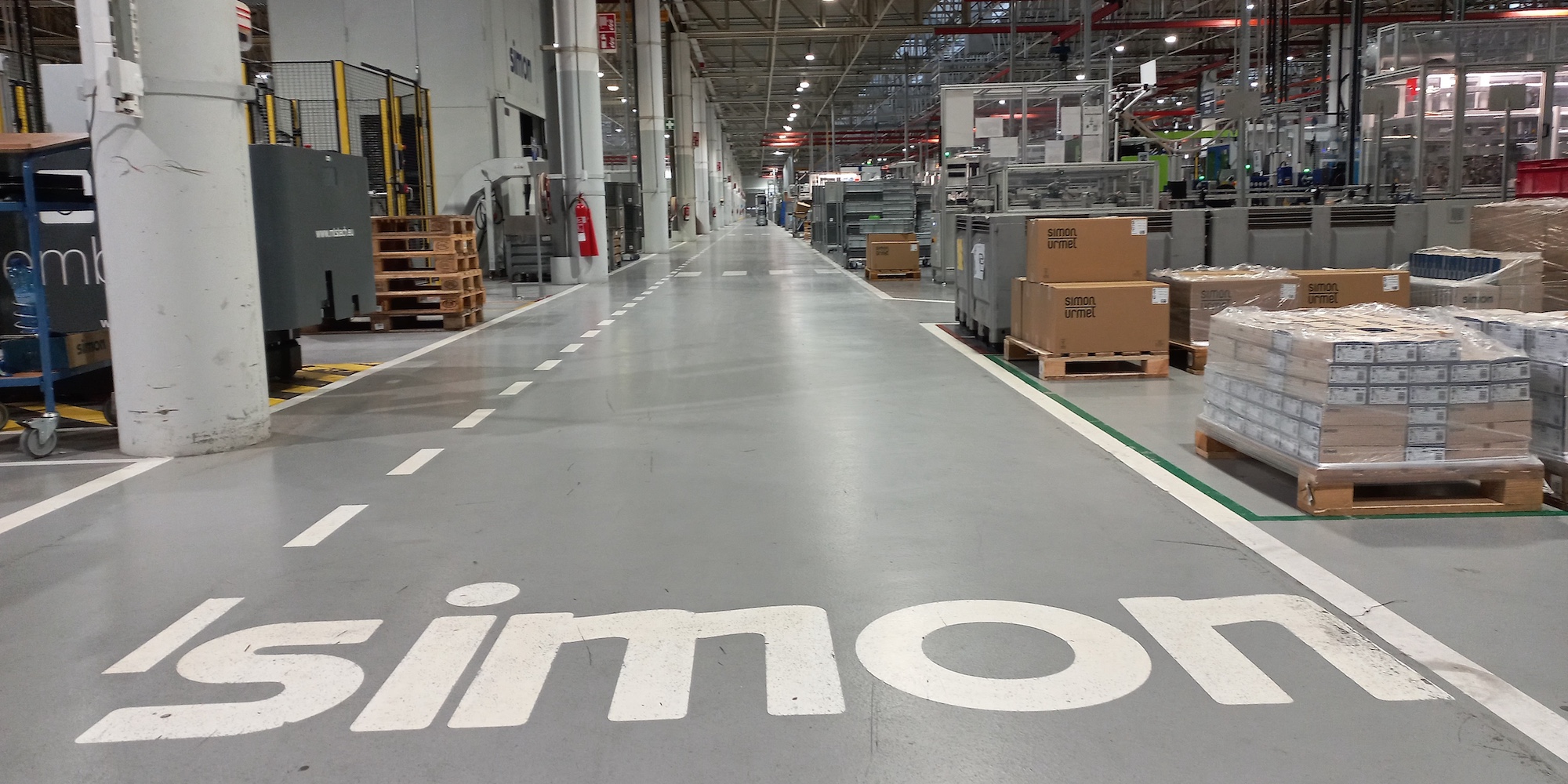

CASE STUDY — Simon, a Spanish leader in electrical mechanisms, went from growth-fueled fragmentation and operational complexity to a coherent, people-centric lean system spanning factories and offices worldwide.

OPINION – Managers and investors are starting to understand that, in the long term, a company's success is built on value for the customer and not on marketing manipulations.

OPINION – When do our mistake become an ominous sign that we are giving up on our customers and people? Following the salmonella contamination in cereals in Israel, the author reflects on business purpose and the importance of transparency.
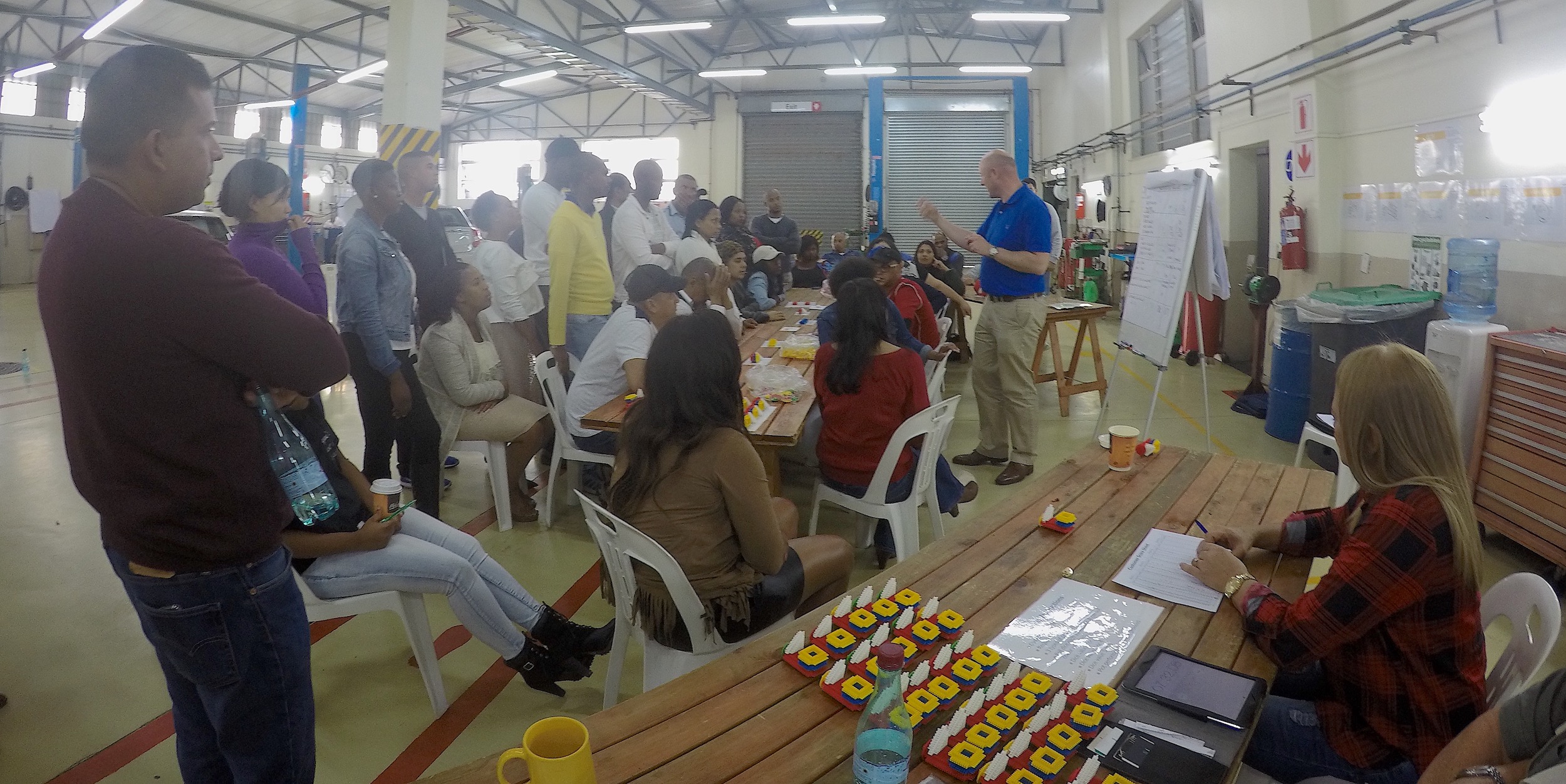
INTERVIEW – The Lean Enterprise Academy just launched the Lean Learning Journey, an online platform from which practitioners can pull the practical knowledge they need in their lean transformation.