


From chaos to clarity: turning around logistics with Lean
CASE STUDY – Facing costly inventory errors, Hidrogística transformed its warehouse operations by engaging its team, standardizing processes, and building a culture of ownership – reducing discrepancies from 5% to near zero.
Words: María de la Paz Diaz and Luis Alfonso Sasmay
In late 2022, Hidrogística—the logistics operator for Aguas Andinas, one of Latin America's largest water utilities—found itself at a crossroads. An alarming 5% discrepancy in our company-wide inventory audit, equivalent to a €400,000 gap, shook our confidence. Of that amount, €150,000 was confirmed as financial loss. For a company managing infrastructure as vital as clean water and sanitation, these numbers were a wake-up call.
It was clear we had to change the way we worked. Instead of pointing fingers or trying to patch the problem with quick fixes, we made a choice: to transform from within. That’s when we reached out to Lean Institute Chile, a connection that would go on to reshape not just our logistics function, but our entire way of thinking.
At the heart of our lean journey was our warehouse operation. The team there was exhausted – working late hours, coming in on weekends, constantly putting out fires. The prevailing mindset was that we needed more: more people, more technology, more resources. What Lean would teach us was that we didn’t need more. We needed better.
We began by redefining our purpose. We resisted the urge to fix everything at once and instead chose to zero in on our inventory discrepancies. Through process mapping, we got everyone involved – from leadership to front line. Together, we examined each step of our logistics process to understand where value was being generated and where it wasn’t.
What we found was eye-opening. Basic steps like verifying incoming materials from suppliers were being skipped. If a supplier claimed to deliver 100 units, we took their word for it. This blind trust at the source was setting off a chain reaction of inaccuracies that carried through every part of our process.
The first few weeks were tough. People came in defensive. Many believed the real issues came from outside their department. If you weren’t in the room, you were probably the one being blamed. But once we started collecting and sharing data, those assumptions crumbled. The truth is always in the numbers. And when people saw it for themselves, when they realized we were responsible for our own problems, attitudes began to shift.
Lean coaches from the Institute didn’t act like outsiders telling us what to do. They became partners. As trust grew, so did the team’s willingness to try new things. We began holding daily meetings, tracking key indicators on visual boards, and applying A3 thinking to analyze root causes rather than look for scapegoats.
We created work standards that didn’t exist before. We launched a daily cyclical inventory count and assigned it to a newly promoted team member from the warehouse. This boosted both the accuracy of our counts and morale. We activated SAP’s warehouse management module, replaced handwritten notes with barcodes, and introduced a second layer of verification in the picking process to prevent mistakes from reaching our customers.
Overtime, once a fact of life, disappeared completely. We no longer needed to stay late or come in on Saturdays to clean up the week’s chaos. Our processes worked, and the results proved it. The following inventory audit showed a 1% discrepancy. The year after that, we reached just 0.02%. We had gone from losing €150,000 to less than €15 in inventory differences. And we didn’t hire a single additional person to do it.
The real transformation, however, wasn’t in the numbers. It was in our mindset. We, as leaders, realized our behaviors had to set the example for the rest of the organization and spread this new way of thinking across the team – that’s when we started performing daily gemba walks and providing hands-on coaching. Today, we no longer react to problems; we study them, understand them, and solve them together.
This change in mindset also reshaped how we approach resistance. At the beginning of the transformation, there was skepticism from some team members. One of our warehouse coordinators was even considered for dismissal. But rather than give up on him, we committed to supporting their growth. With consistent coaching and exposure to lean principles, they not only turned their performance around – they became a model of change, now championing the very practices they once resisted. This experience reminded us that resistance isn’t a signal to retreat; it’s a signal to challenge the way we lead.
Our warehouse has become a reference point for the rest of Aguas Andinas. Even Veolia, our controlling shareholder and a global leader in water services, has taken notice. What started as an urgent fix has turned into something of a model area, in which we are developing a culture of excellence.
These results were a direct result of the work of our people, a team that chose to take ownership of their processes and began solving problems instead of working around them. We have built a culture where problems are not hidden but surfaced, where data informs decisions, and where small, incremental improvements are more powerful than dramatic overhauls.
We didn’t invest in new equipment or costly systems. We invested in ourselves. We learned to ask questions instead of making assumptions. We learned to rely on facts, not impressions. And most of all, we learned that real change doesn’t start with tools or software. It starts with people willing to see differently and lead differently. Our journey from chaos to clarity has taught us that a lean transformation is not about the destination, but about the discipline you practice every single day.
THE AUTHORS

Read more


INTERVIEW - In this interview, Lynne Smith discusses the potential and difficulties of applying Lean Thinking to NGOs and looks back at the lean transformation at the Gates Foundation.

THE LEAN BAKERY - For the past decade, lean has fuelled the growth of a chain of cafes/bakeries in Barcelona. With 100 now open, the Retail Manager explains how lean helps them manage a booming business.
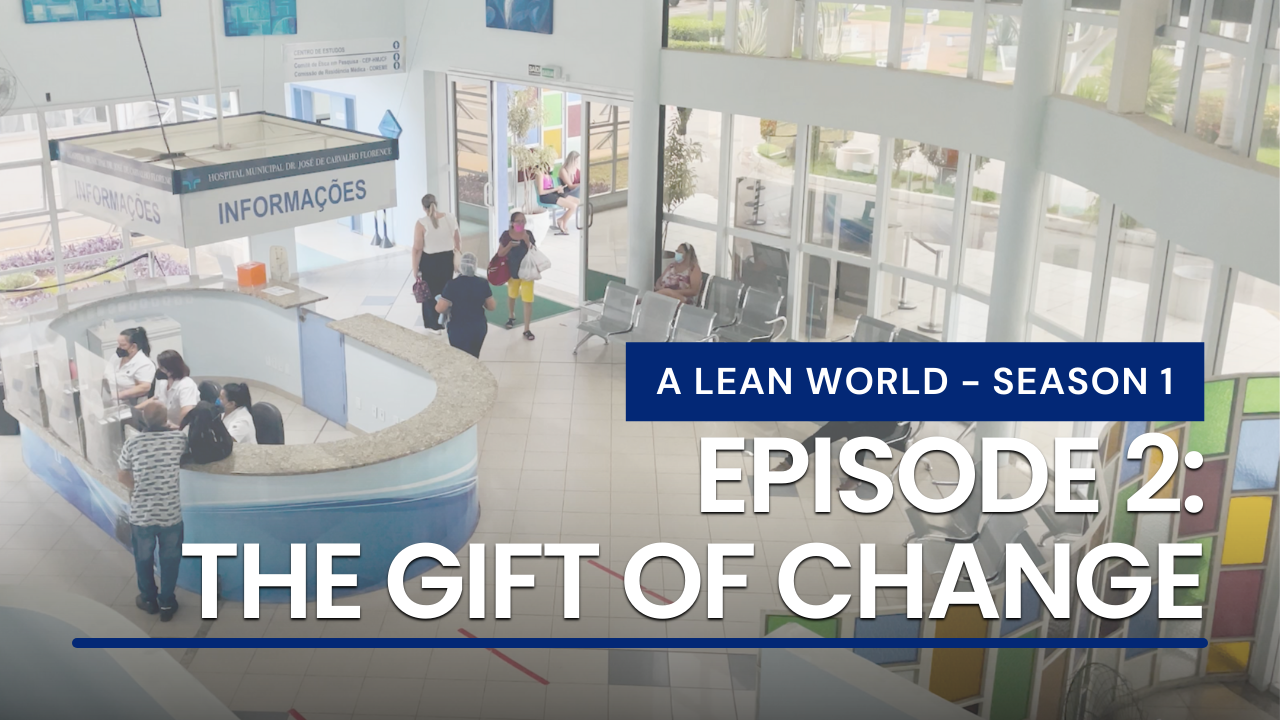
WEB SERIES – In Episode 2 of our docuseries on lean in Brazil, we learn how the pioneering efforts of a cancer clinic have inspired the city of São José dos Campos to transform into a lean healthcare cluster.

RESEARCH - This interesting study, based on 44 Volvo plants and 200 Volvo interviewees, looks at how the implementation of lean thinking influences a plant’s performance over time.
Read more

INTERVIEW – A VP at energy company E.ON shares his thoughts on the current energy crisis and discusses how lean is helping them to navigate it.

WEB SERIES - In the last episode of our It's a Lean World series, we travel to the tip of South America to visit the southernmost Distribution Center in the world and learn about its lean work.

WEB SERIES - In this episode, we head to Chilean Patagonia to visit a manufacturer of fish feed that turned to Lean Thinking to improve yield and eliminate inventory gaps and stock-outs.

WEB SERIES – Season 2 is here! In the first episode of this season, we visit a company in Chile that shows us how sustainability can be the cornerstone of an improvement project... and not just an afterthought.