


The attitude of Lean
THE LONG READ – The author argues that Lean succeeds not because of its tools, but because of the attitudes that give meaning to customer focus, quality, flow, and kaizen.
Words: Michael Ballé
I was recently having lunch with yet another CEO asking me to explain Lean: why is Toyota so much better than its competitors, so consistently, and in all dimensions — from product offering to profitability to employee engagement? This is the question of Lean that was uncovered 30 years ago by Jim Womack and Dan Jones when they ran their massive comparative study of automakers and showed in The Machine That Changed The World that Toyota was ahead of the curve everywhere, not just on one or two points.
The answer is always the same: Toyota has a unique method that it has made explicit, formalized and taught in an attempt to bring its suppliers on board and that has been studied and experimented with by countless companies, consultants, and researchers (including yours truly) over the past decades. This Toyota Management System fascinates me still, first because it provides the only viable alternative I know to financial, MBA-style management (which I believed has created the wealth of global corporations and downfall of local companies, in Japan as everywhere else) and secondly, because every time a leader “gets it,” Toyota-like results are achieved in practice, within the context of the company and its markets (some markets are clearly tougher than others).
In short, many try, some succeed, most fail, because some “get it” and some don’t. But what is there to get?
Toyota’s management system itself is well known. It’s made up of five elements:
- Customer satisfaction by product market fit and value analysis/value engineering.
- Building quality into products and services through jidoka.
- Reducing lead-times through just-in-time all the way from suppliers to customers.
- Engaging employees through load leveling, teaching standards, and encouraging kaizen.
- Building mutual trust between management and workers through basic stability of working conditions (work environments are maintained, problems are solved, machines don’t fail, needed materials are available).
The aim of this system is to please customers (literally “bring a smile to their face”), as well as reduce overall cost by eliminating the waste that inevitably arises in way of working. By examining their own processes, recognizing the waste, figuring out how to get rid of it, people are taught to better understand what they’re asked to do and why, to take ownership of their jobs and to make better daily decisions and take initiatives to improve things. Yada, yada, yada. I’ve not said anything that hasn’t been said a million times by now, and put this way, it doesn’t seem that extraordinary. What, then, makes it extraordinarily difficult to adopt?
The issue is not in the techniques themselves, but in the attitudes underlying them. It’s not about the methods, but about the mindset of the people applying them. If someone approaches a technique with the wrong intentions, lack of understanding, or poor judgment, even the best methods can fail or lead to bad results. What truly matters is the way people think, their values, and how responsibly they use the tools available to them. What makes this system so powerful is the human motivation to make it work in a certain way.
CUSTOMER SATISFACTION: HELPING OUR CUSTOMERS WITH GRATITUDE FOR THEIR BUSINESS
Satisfying customers simply means intending to genuinely help people in a way that they appreciate: offering something that is truly useful, easy to use, and pleasant to experience. Beyond that, it also means contributing positively to society, not just focusing on profit. When a product or service improves people’s lives in an honest way, it creates real value that goes beyond a simple transaction. In practice, this means identifying a group of people who have a real need and are working hard to meet that need, and providing a better solution than they currently use. It involves care, effort, and a commitment to doing the job well. You focus on making sure that what you offer actually solves a problem or makes life better, and you keep improving it until it truly delivers on that promise.
This is a far cry from finding sheep to shear with shoddy products, lousy service, misleading marketing, rent-seeking behavior and so on. Very practically, it means you will work at solving your customer issues because that’s what you feel like doing. The basis of customer satisfaction is cognitive empathy: putting yourself in their shoes, seeing what they’re trying to do and figuring out a way to help them, now and tomorrow.
Customer satisfaction plays out on two levels. First, treating your customer service department like the head of your company: this is where customers actually tell you how your offering is not helping them, in various ways. Grasping the difficulties customers have with your offer, you can then transfer this information to engineering and get them to work: what can we do to fix this in products currently in production, and what do we need to change in the next generation of products? Now, as you read this and you sigh thinking, “I’ll never be able to get my engineers to do that,” you realize how much of an attitude issue this is, rather than a technical one. Solve customer problems until they’re solved.
The second level of customer satisfaction is that times and tastes change, so a very useful product or service you used to provide (say, a local newspaper, or a video rental store) is no longer in demand. You are being challenged by the market as a whole, and to keep your customers happy, you need to respond, which might require you to step way out of your comfort zone and confront the stickiness of your operations. I get it, digital cameras and faxes were so cool. And there will always be some demand for vinyls. But, by and large, things change and focusing on helping customers means scratching your head to figure out the challenge and what response you’ll bring to it.
Lean’s deeper break with finance-driven strategy is that your product line-up is your strategy, because products are there to help people, not to be sold to them. Of course, we need to make a profit from these products or services, if not we won’t stay in business very long, but making a profit is our responsibility, not something we do by pushing our costs and inefficiencies onto our captive customers.
BUILDING IN QUALITY: SEEING HIERARCHY AS HELP TO WORKERS
Watch any contractor work on your home—say, replacing a water meter to comply with new regulations—and then hit a snag: your plumbing is 50 years old, and nothing fits anymore. What can they do? They can plough ahead and jury-fit something, they can stop and say someone will come back later, or tell you you’ve got to do the work and then they’ll come back. The one thing that rarely happens is someone showing up to help solve a problem.
We have a long history of bosses, well, bossing people. Get it done, I don’t care, give me your numbers and your reports, next week you’ll be working on area 12. Promote someone and they often see their role as making sure that all jobs that need to be done are covered, that reporting numbers are filled into the system, and that routine decisions are taken for people while difficult decisions are pushed upstairs or ignored. Very few see their role as the responsibility to help each of their staff do a good job for their client and grow in autonomy, competence and fun of doing the job.
Back in the early 20th century, while the Taylorist method was getting traction in the West, Sakichi Toyoda turned this on its head by focusing on recognizing problems, stopping rather than doing bad work and having someone experienced show up and correct the problem. He first applied this to self-stopping machines, and then Toyota as a whole generalized the idea to assembly through andon cords and team leaders. Surprisingly, this investment in people generated untold productivity, vastly superior to any other method. It turns out that it’s better to have 30% of your resources on the shop floor supporting the work and achieving 100% productivity from people on the line, than have 100% of people on the line with 50% overall productivity.
To understand built-in quality, you must see the attitude: first, of not passing a defect through to the customer (by stopping issues as early as possible) and second, of being committed to help the person do a good job (not let them muddle through and suffer the consequences). It’s the attitude to help people do things right that leads you to visualize traps in the work and to encourage problem solving and learning. Without this orientation towards helping everyone all the time, jidoka becomes another control mechanism that will disappoint both workers and management.
REDUCE LEAD-TIME WITH JUST-IN-TIME, THROUGHOUT THE VALUE NETWORK
My father and I once described Lean as:
- Protect your customers
- Safeguard your people
- Control lead-times
- Reduce lead-times
I stand by this definition. You can look at anything you do and ask yourself what the overall lead-time is, from the moment you start doing this to the moment you deliver it, or you do the work and see how long it takes, expecting people will get it when it’s ready.
In the 18th century, we figured out that to scale product making and keep costs down, rather than adding more artisans each completing an entire job (as most non-Western societies did), we could specialize tasks and create a sequence (Adam Smith’s famous pin factory). Once we did that, we could then replace some of the specialized tasks with machines that could produce faster and, to some extent, more reliably than people, et voilà. The downside of this method is that it creates inventories (or backlogs) between tasks, of work-in-progress parts or files. If your demand is strong, these accumulating inventories are nothing to worry about, but they eventually add up as they become a system and create a growing debt of produced-but-unsold components that weigh you down. ERPs were then invented as a way to regulate inventories to keep them under control while not starting the flow (Real Demand = Customer-Demand — Inventory + Safety Stock), but unfortunately are sensitive to the Forrester effect, creating chaos all over supply chains.
The resulting attitude for most businesses is to let each person take care of their part of the process. The assumption is that, if everyone does their job right, overall the work will take care of itself. This is not wrong per se, but leads to local optimizations (look boss, I optimize my area far better than my suppliers or internal customers) at the cost of overall performance.
Kiichiro Toyoda, Sakichi’s son and founder of the car business, figured out that if he looked at the overall lead-time rather than adding task to task, he could better use his scarce capital to efficiently produce complete cars. His earlier attempts were interrupted by the war economy and the Japanese army taking over the plant’s scheduling to make parts (great believers in specialized work), but eventually in the 1950s a machine shop supervisor, Taiichi Ohno, hit upon the idea of kanban. He could represent visually what had been consumed by the next step in the chain to send the message to produce upstream: sell one, make one.
This simple idea revolutionized industry, because now we can’t produce bad parts as we work with limited WIP and now we have to work together to keep the work flowing with small frequent batches — the system shifts from a supply chain to a value network, and needs to be extended to suppliers as well (which explains why Toyota became keen to communicate its method externally, after much initial debate).
Looking at overall lead-time is an attitude. It implies worrying about your overall Return on Assets, not local Return on Investment, and it requires teamwork, which is making sure people help each other make work flow in small batches end-to-end. There are two known facts that we can personally experience when we drive on a highway and traffic progressively slows down and then grinds to a halt as we get caught in a traffic jam:
- Little’s law: throughput = WIP/Lead-time
- Kingman effect: as utilization of a resource increases beyond 80%, lead-time increases to infinity (a single delay will add growing lead-time)
The impact here is the willingness to tolerate “slack” in your resource use in order to have better lead-times. As this looks costly, the trick really is to focus on lead-times first, and figure out all the causes of failure to meet lead-time (like stagnation) from inflexibility, backflush or imprecision and errors, and encourage teamwork (or bang heads together), so that people solve these causes and reduce lead-times (it mostly involves having every task completed on time and passed on on demand), and worry about overall optimization of resources, not local. Toyota produces twice as many cars per employee as Volkswagen at a comparable overall throughput. It also has more identifiable local slack than its optimized competitor — do the math.
Wanting to reduce overall lead-times is an attitude more than a technique. How can we better help customers? How do we support our people to do their jobs right, consistently? And what is our overall lead-time from start to finish? Can we see stagnation, and can we ask people to improve teamwork so they better solve these problems? This needs motivation to fight a system that tells you to let the computer do its thing (products are delivered, aren’t they?) and that all the rest is the “normal” cost of doing business.
ENCOURAGE THE KAIZEN SPIRIT
Cost is the shadow of motion. The logic of the gemba shows that mura (peaks and valleys) creates muri (overburden), which leads to muda (unnecessary work). A kaizen attitude means teaching everyone that work should happen right-first-time in a definite time bracket, which leads to everyone standardizing their work, which means finding the right sequence of right steps to get the job right every iteration, particularly in iterative work. Rather than specifying work for others, as bosses will, the spirit of kaizen involves teaching each person how to level their workload, study the standardized way of doing the work, and looking for improvements in unnecessary movement between value-adding steps (including rework, redoing, and back-and-forth).
Kaizen spirit is the attitude of knowing no process is ever perfect, and that the best way for people to make the right calls in all the unforeseen events of every-day tasks is to study their own routine sequence and find which points to improve by themselves. As this isn’t either natural or easy, this means showing kaizen opportunities and letting people figure out by themselves how to improve their work — all people, all the time.
Kaizen and standardized work (knowing and correctly applying work procedures) go hand in hand. Standardized work is the key to spotting problems early, solving them repeatedly is the key to thinking about ways to avoid the problem by greater preparation and better work layout. This requires an attitude to fight the natural inclination of “if ain’t broke, don’t fix it.” The aim here is not to turn people into robots but to make them think about what they do and encourage them to, first, find a better way and, second, to convince people around them that it is the better way. Developing people means deepening both their technical skills and their leadership skills, working with others to improve collective processes.
Kaizen is not just a way to improve processes. It deeply engages people in their work.
When work is unstable, uneven, and full of rework or firefighting, people feel overburdened and frustrated. They spend their days reacting, compensating, and dealing with problems they didn’t create and can’t fix. This is what mura, muri and muda look like in real life: daily irritation, stress, and a sense of not being in control. Kaizen, starting with standardized work and right-first-time thinking, restores a sense of order and predictability. People know what good looks like, what they are trying to achieve, and where the problems are. This alone already improves satisfaction because the job becomes clearer and more manageable.
But the real shift comes from what kaizen asks of people. Instead of being told what to do and how to do it, they are invited to study their own work, identify difficulties, and improve it themselves. This is fundamentally different from traditional management. It gives people ownership. They are no longer just executing tasks; they are actively shaping how the work is done. That sense of control and contribution is a powerful source of engagement.
Kaizen also builds competence. By repeatedly solving problems, refining standards, and thinking about better ways to work, people develop real skills. They learn to see waste, to anticipate issues, to collaborate with others. Work stops being a routine to endure and becomes something to master. And with mastery comes pride. Doing a job well, and doing it better today than yesterday, is inherently satisfying. There is also a social dimension to learning. Kaizen is not done alone: it requires convincing others, sharing ideas, improving together. This creates a different kind of teamwork, not based on coordination or reporting, but on mutual improvement. People help each other succeed, and that reinforces trust and respect.
As a result, kaizen reduces the very frustrations that disengage people in the first place. By addressing root causes instead of constantly fighting symptoms, it gradually removes the daily “fires” that exhaust teams. Work becomes smoother, problems become learning opportunities, and progress becomes visible. This creates a positive cycle: the more people improve their work, the better it feels to do it, and the more they want to keep improving. Employee engagement is not something added on top of kaizen. It is a direct result of it. When people are given the means, the responsibility, and the support to improve their own work every day, satisfaction follows from seeing their work progress and gaining in autonomy — as well as being recognized for it.
Kaizen might be a matter of taking small steps, but it’s still not for the faint-hearted. Routine work is based on habits, and changing habits is never easy. It’s not easy for yourself and convincing a team there is a better way to work isn’t easy either. Practicing kaizen oneself and pushing others to do so as well is no mean task, and needs a fundamental commitment to developing people: giving them the means to improve their work themselves. Most people feel they first need to put out the daily fires that erupt in the job and then, once this is done, maybe one day think about improving (“I’ve been meaning to fix this forever”). The trick here is to realize that although you need to put out fires (if not, they will just spread), doing just that will only lead to more fires. Prioritizing kaizen from everyone every day (which starts with convincing people to commit to standardized work) is the only way to have fewer and fewer fires and learn to change. I know many people who found participating in a kaizen effort once or twice fun, but then stop, not realizing that as they do they also stop learning. The spirit of kaizen needs to be practiced every day to become… spirit.
COMMITTING TO ENHANCING WORKING CONDITIONS AND STABILITY
Look at any job and ask yourself: how could this work be easier for the people who do it? Mostly, the problem is not so much in how people do the job (unless they’re very new to it), but the conditions they work in. I remember staying at a friend’s house the day his dishwasher broke down. He tried to fix it right there and then, but didn’t have the right screwdriver. So he first had one problem — the broken dishwasher — and now he had two, the broken dishwasher and the wrong screwdriver. He thus set upon looking at his toolbox, only to realize half the tools were missing. He now had three problems: the dishwasher, finding the right screwdriver, keeping his toolbox in order. And so on. Problems first add up and then they multiply.
Looking beyond the immediate issue to the conditions of the problem, and then committing to fix work conditions is an attitude. Be creative with what you have is what most managers will tell you, and it is also shying away from their own responsibility. Making sure people maintain proper care and 5S of their areas is the first step to maintaining conditions, but so is systematically teaching problem solving and making sure all machines and equipment are available and working when you need them.
Trust is not just a word. Trust is relying on shared responsibility. If you leave your car in a garage while you go on a trip, you need to trust nothing will happen to it while you’re gone and that you can readily access it and leave with it when you return. There is no trust in the absolute, just proofs that you can be trusted. Committing to basic stability in working conditions to make people’s lives easier is an attitude. As is letting them deal with whatever happens and still expect results.
I’VE GOT THIS, LEAVE IT WITH ME
Helping means saying “I’ve got this,” or “Leave it with me.” Not “what have you done for me lately?” In my mind, the most foundational attitude shift in business is taking responsibility for helping others deliver value, as opposed to extracting value from them and letting them deal with whatever occurs that day. This is the overall orientation at the heart of the Toyota Management System that is so effective, and yet so alien to modern extractive management and hard to achieve. There is no real mystery to the Toyota system. Its principles have been described, documented, translated, taught, and debated for decades. Anyone willing to spend a bit of time on them can understand the logic behind just-in-time, jidoka, kaizen, or standardized work. The tools themselves are not particularly complex, and learning how they function is, in many ways, the easy part. Even experimenting with them is accessible to most organizations.
Where things become difficult is in truly trying to embrace how to think about the tools. The system only works when people adopt the underlying attitudes: a genuine desire to help customers, a commitment to support others in doing good work, the discipline to look at the whole rather than optimizing locally, and the humility to keep improving every day. These are not technical skills that can be deployed on command, but deeper habits that require consistency, effort, and often a personal transformation.
Teaching a tool within a traditional management framework is just as easy as it is guaranteed to fail. You can explain kanban cards, run kaizen workshops, introduce standard work sheets, and people will comply. They will fill the forms, attend the meetings, use the vocabulary. But because the underlying logic of how they think about work has not changed, the tool gets absorbed into the existing system. It becomes one more layer of control, reporting, or optimization and loses its purpose. In that sense, teaching tools without changing attitudes is not neutral — it is programmed failure.
Teaching the attitudes that give these tools meaning is much harder. You have to show up and show it, in real situations, with real problems, alongside people doing the work, not with slides or courses. It requires taking the time to go and see, to ask questions, to help solve issues without taking over, to demonstrate what it means to support rather than judge. It means repeating, again and again, what good looks like, until people begin to experience the difference for themselves. Such learning demands patience. People do not change how they think because they are told to; they change because they see, try, struggle, and gradually understand. It also demands consistency from leaders, because any gap between what is said and what is done immediately undermines the effort. Teaching attitudes is slower, more demanding, and far less visible than rolling out tools — but it is the only way those tools will ever work as intended. Before changing others, you must change yourself.
Which is why many try and few succeed. It is tempting to apply the tools while keeping the same assumptions about control, efficiency, or short-term gain. But without the right intent, the tools lose their power and sometimes even make things worse. What makes Lean different is not knowing something others don’t, but practicing, relentlessly, a way of thinking that aligns action with purpose.
So yes, understanding the Toyota Management System is easy (well, not too hard). Learning the tools is also within reach. But acquiring the attitudes that make it all work — that is the real challenge. And that, more than anything else, is what separates those who “get it” from those who don’t.
THE AUTHOR

Read more
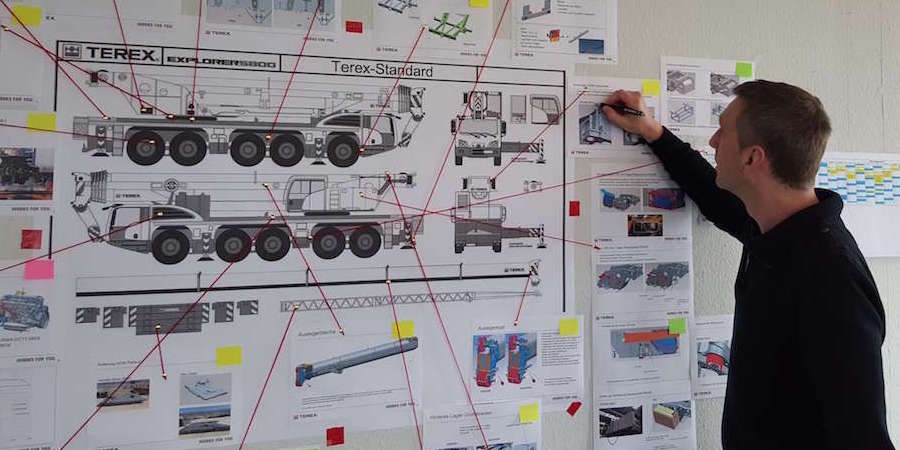

NOTES FROM THE GEMBA – In the past 15 months Terex Cranes has successfully initiated a lean transformation. Follow Catherine Chabiron on her gemba walk to see what this large company is doing to put learning at the heart of its activities.

ONE QUESTION, FIVE ANSWERS – Inspiration can help us solve a problem, get our colleagues interested in lean, or even pick ourselves up after a failure. But where do we get it from? We asked five practitioners.

CASE STUDY – The transfer of a patient from one care setting to another is a delicate time. Insurance company SulAmérica has used its extensive lean experience to improve transitional care, and here’s how they did it.

INTERVIEW – The CIO of a French pharmaceutical company gives us a sneak peek of her presentation at the upcoming Lean IT Summit, focused on using the obeya to change the IT department.
Read more

FEATURE - Projects or programs? The authors discuss why Lean Thinking should go beyond piecemeal operational improvements, as a transformative strategy that balances today’s demands with future adaptiveness.

FEATURE – The real power of Lean lies not in efficiency tools, but in its ability to turn organizations into learning networks where interaction, engagement, and shared problem solving create lasting collective intelligence.
INTERVIEW – Over the past decade, Catherine Chabiron’s Notes from the Gemba series has turned into some of the most insightful content on Planet Lean. Our editor sits down with the author to talk genchi gembutsu, writing, and building a lean community.

FEATURE – For many organizations, devising effective strategies remains a gap to fill and that’s something lean can help with. Michael Ballé discusses strategic thinking with our editor.