


MIFA and VSM: what Toyota really taught us about Material and Information Flow
FEATURE - Are Toyota’s MIFA and Value Stream Mapping really different? This article explores their shared origins, challenges misconceptions, and explains why effective mapping starts with problems.
Words: David Brunt and David Marriott
There is a debate within the lean community that resurfaces surprisingly often. Is Toyota’s Material and Information Flow Analysis (MIFA) fundamentally different from Value Stream Mapping (VSM)? Sometimes the argument goes further: VSM is described as a Western simplification while MIFA is presented as the “real Toyota method”.
Having researched, taught and applied value-stream thinking for decades (and, in David Marriott’s case, having worked directly for Toyota in a variety of roles including supplier development) we think much of this debate begins with the wrong question. The evidence shows a clear lineage between Toyota’s Material and Information Flow approach and the method Mike Rother and John Shook subsequently called Value Stream Mapping. But Toyota’s own materials also show why not every map should look the same.
1. SETTLE THE TERMINOLOGY FIRST – MIFA OR VALUE STREAM MAPPING
Rother and Shook explicitly explain in Learning to See that the method they call Value Stream Mapping (VSM) is known at Toyota as Material and Information Flow Analysis (MIFA) and that their method is based on Toyota’s maps. That makes it difficult to sustain the idea that MIFA and VSM are unrelated or competing methodologies.
John Shook has since put the point even more directly: MIFA and VSM are two names for essentially the same process. In other words, the distinction is not between a genuine Toyota method and a separate Western method. Learning to See deliberately takes a Toyota system-improvement process largely used by a relatively small number of experienced system improvers and makes it accessible – or, in Shook’s word, “democratized” it – so that many more people could learn to see and redesign flow.
The map is not the analysis. The analysis is not the improvement.
John Shook later reinforced the distinction: value stream mapping is not flow analysis itself; it is a tool that guides the analysis needed to improve existing flows and design better ones. Therefore, the historical lineage is best understood as Toyota Material & Information Flow -> Learning to See -> Value Stream Mapping.
2. WHY MATERIAL & INFORMATION FLOW WAS NEEDED
Lean Thinking by Jim Womack and Dan Jones articulated five principles: specify value, identify the value stream, make value flow, let the customer pull, and pursue perfection. The value-stream perspective is important because organizations are usually managed vertically while value flows horizontally across functions.
Toyota needed to understand not only physical movement but the information that controls it: what should be made, when, how much, in what sequence, where it should go, and how the preceding process knows that the next process needs something. Material flow and information flow are inseparable.
There is an important translation nuance here. The Japanese term behind “material” is mono: literally the thing, item, product or work moving through the system. Translating mono as “material” can therefore mislead us into thinking only about raw material. Similarly, “information” does not refer to every piece of information circulating within the organization. In this analysis, it refers to the control information – the work instruction or signal that causes someone or something to make or move the mono. In an information-processing value stream, information itself may become the “thing” being worked on. The second dimension remains the information that controls that work.
3. WHAT TOYOTA ACTUALLY TAUGHT
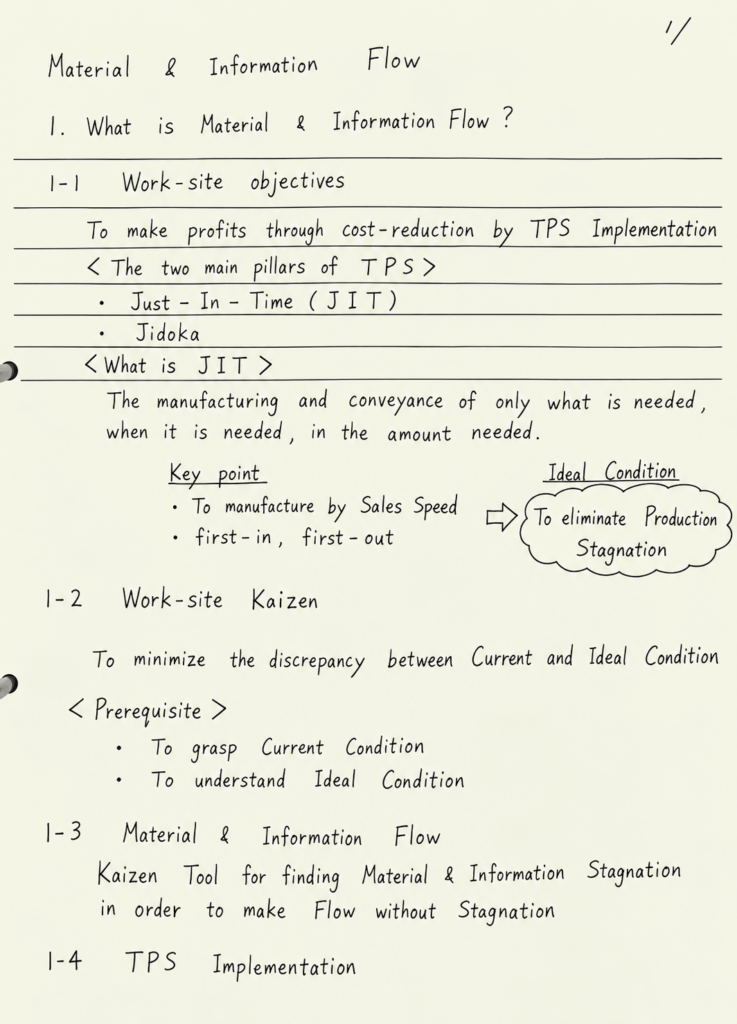
The coordinator material begins with purpose, not symbols. It connects workplace objectives to Toyota Production System (TPS), identifies Just-in-Time (JIT) and Jidoka, defines JIT as manufacturing and conveying only what is needed, when it is needed and in the amount needed, and describes the ideal condition as eliminating production stagnation.
Work-site kaizen then seeks to minimize the discrepancy between the current and ideal condition. This requires people first to grasp the current condition and understand the ideal condition. Only then does the material introduce Material & Information Flow as a “Kaizen Tool for finding Material & Information Stagnation” in order to create flow without stagnation.
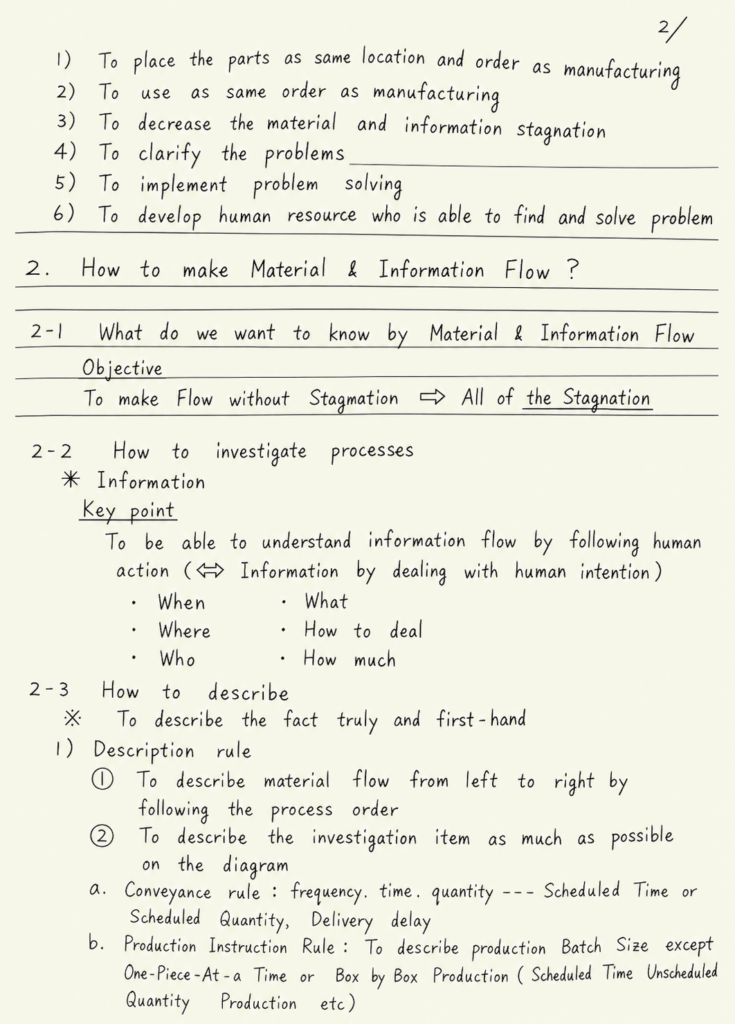
Developing People, Not Merely Drawing Maps
The teaching material goes further. It identifies purposes including clarifying problems, implementing problem solving, and developing people who are able to find and solve problems. That makes MIFA a capability development mechanism as well as an analytical one.
A good mapping exercise should produce two outputs: a better value stream and better thinkers.
“Describe the Fact Truly and First-Hand”
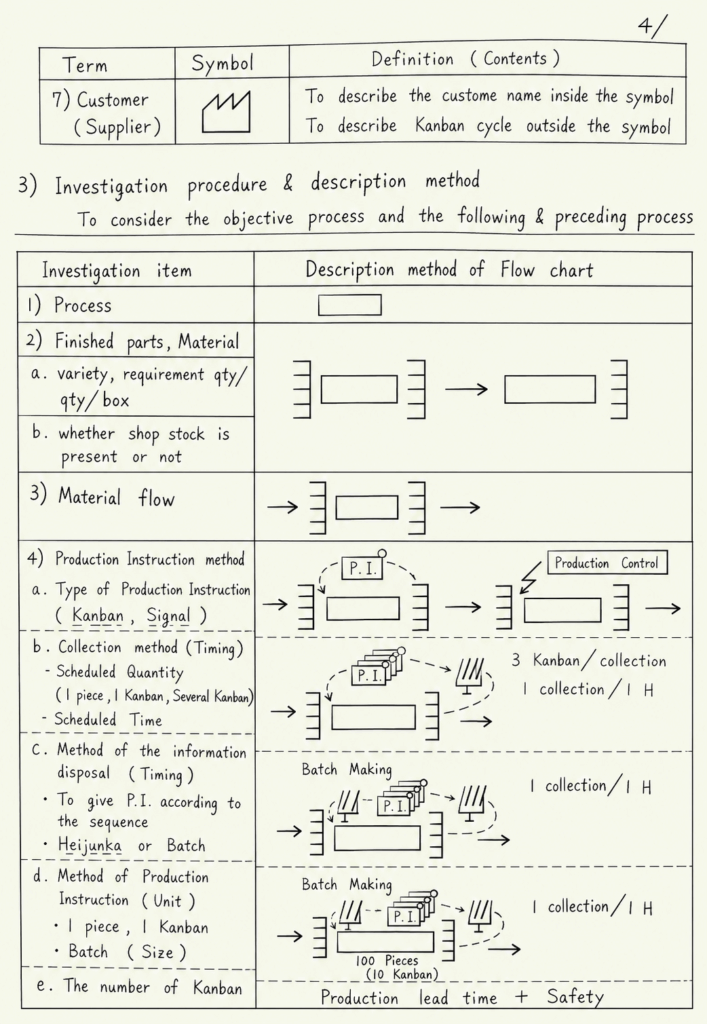
Another instruction in the material is especially important: “To describe the fact truly and first-hand.” Also, a value-stream map should represent facts discovered at the Gemba, not assumptions reconstructed in a conference room. Follow the material, follow the information, follow what people actually do. Ask when, where, who, what, how and how much.
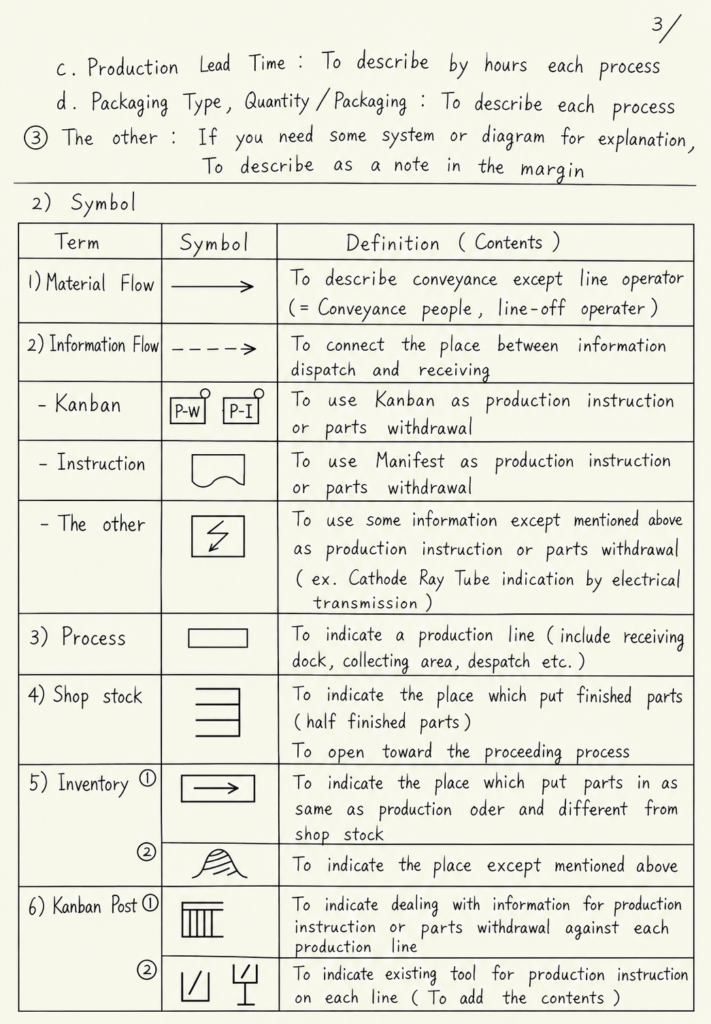
Toyota clearly used conventions. The notes define symbols for material flow, information flow, kanban, production instruction, processes, shop stock, inventory, kanban posts and customer/supplier. But the conventions serve the analysis; the analysis does not exist to serve the symbols.
4. MANUFACTURING LEAD TIME = PROCESSING + STAGNATION

Toyota UK training material makes the logic explicit: manufacturing lead time equals processing plus stagnation. Processing includes actual production and conveyance; stagnation occurs in material and information. This reveals the purpose of the analysis: Where does flow stop? Why? What information causes or permits it to stop? What needs to change?
Dan Jones recalls the origins of this effort in particularly revealing terms. In a recent email to us, he confirmed that he suggested the titles Learning to See and, later, Seeing the Whole Value Stream. The point of both titles was not to teach a drawing technique: it was to provide a way of seeing the system so that people could begin to define the problems that needed solving. He also remembers a conversation at Tokyo airport in which, he thinks, Iwata sketched the MIFA system for him on a napkin.
Also, Jones recognized that this was precisely the way of seeing they needed to develop: first within factories through Learning to See, and later across complete value streams through Seeing the Whole Value Stream. His recollection is personal and qualified as to who drew the sketch, but the insight is clear: seeing the system is the beginning of purposeful improvement, not its end.
5. LEARNING TO SEE MADE THE THINKING TEACHABLE
This is why the most important part of Learning to See may not be any of its maps, but the future-state design questions on the inside front cover. Dan Jones has repeatedly emphasized their importance. They begin with customer demand and takt time, then ask how the system should flow, pull, level and be scheduled. Process improvement comes last. That ordering is designed: improve individual processes after designing how the overall material-and-information system needs to operate, not before.
Shook also points to two limitations in the original book. First, the final chapter on implementing the future state is weaker than the system-design logic that precedes it; capturing implementation in writing was difficult when the book was created in 1997. Second, the Acme Stamping example never makes its problem to solve sufficiently explicit. The improvements are clear, but the “why” is not. Shook has subsequently created an A3 for Acme that frames the need for redesign around tightening customer delivery requirements. That strengthens an important lesson for today: system redesign should begin with a performance or customer gap, not with a desire to “do VSM”.
A beautifully drawn current-state map changes nothing on Monday morning.
6. TOYOTA'S OWN MAPS DO NOT ALL LOOK THE SAME
The following Toyota Motor Manufacturing (UK) and supplier-development examples are important precisely because they differ. They show a common underlying concern with material, information, lead time and control, but the representation changes with the problem and purpose.
Another point lies within the name Material and Information Flow Analysis. At its core, the analysis deliberately maps two dimensions of a business system: the flow of the thing or work (mono) and the control information that tells that work what to do next. The analysis does not attempt to model the whole business system. Once people understand these two dimensions and design a target condition, they can add other dimensions as the problem requires – for example, layout, people, quality, capacity or cost. This helps explain why experienced Toyota practitioners can produce MIFA diagrams that look much richer than the intentionally simple teaching example in Learning to See.
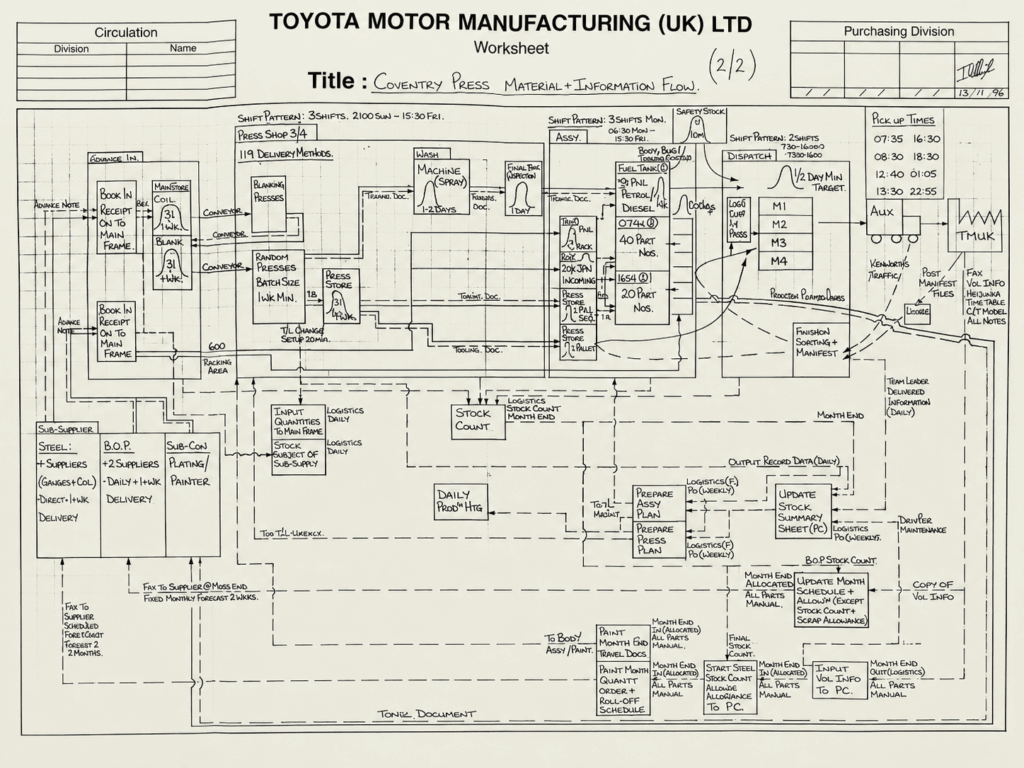
The Coventry Presses worksheet explicitly uses the title “Material + Information Flow”. It follows suppliers, production processes, inventories, logistics and dispatch while also showing schedules, stock counts, planning information and other control loops It is recognisably from the same family of thinking as Learning to See, but it is not constrained by a textbook template.
Mapping as System Design
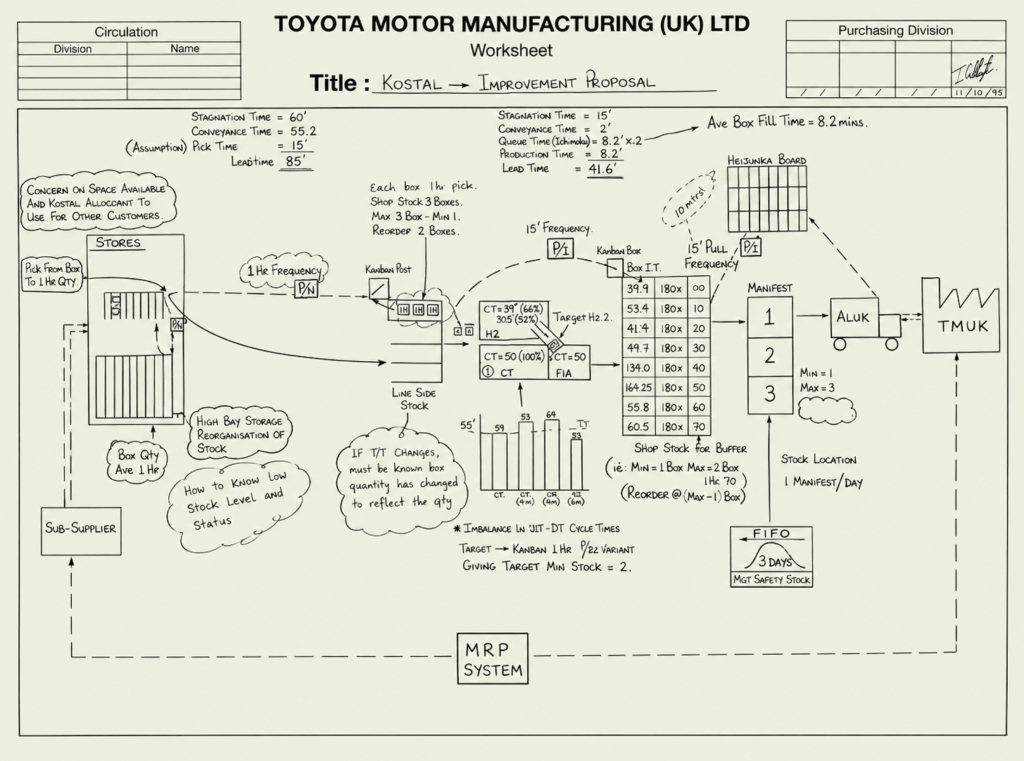
The Kostal proposal concentrates on box quantities, stock, FIFO, kanban, manifests, cycle times and delivery frequency. The handwritten questions are revealing: the map is being used to interrogate the system. How should inventory respond when takt changes? How should low stock be known? The purpose is thinking and system design, not a polished artifact.
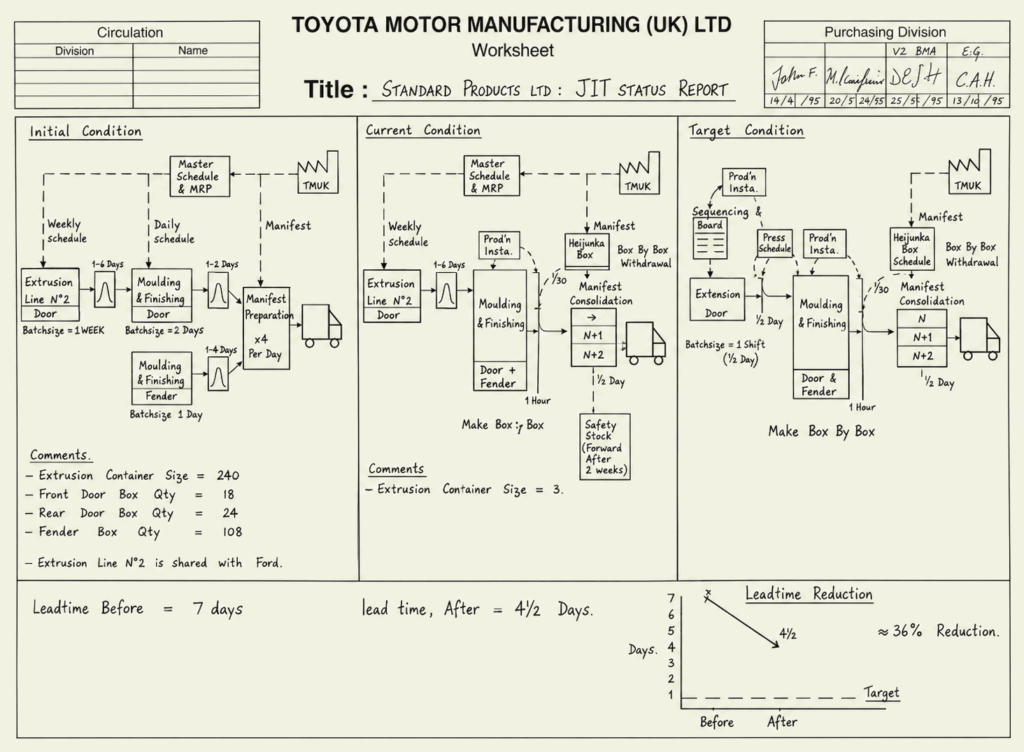
This sheet tells an improvement story. It records an initial condition, a current condition, a target condition and a measurable lead-time reduction. The map is not merely a snapshot; it is part of the problem-solving cycle.
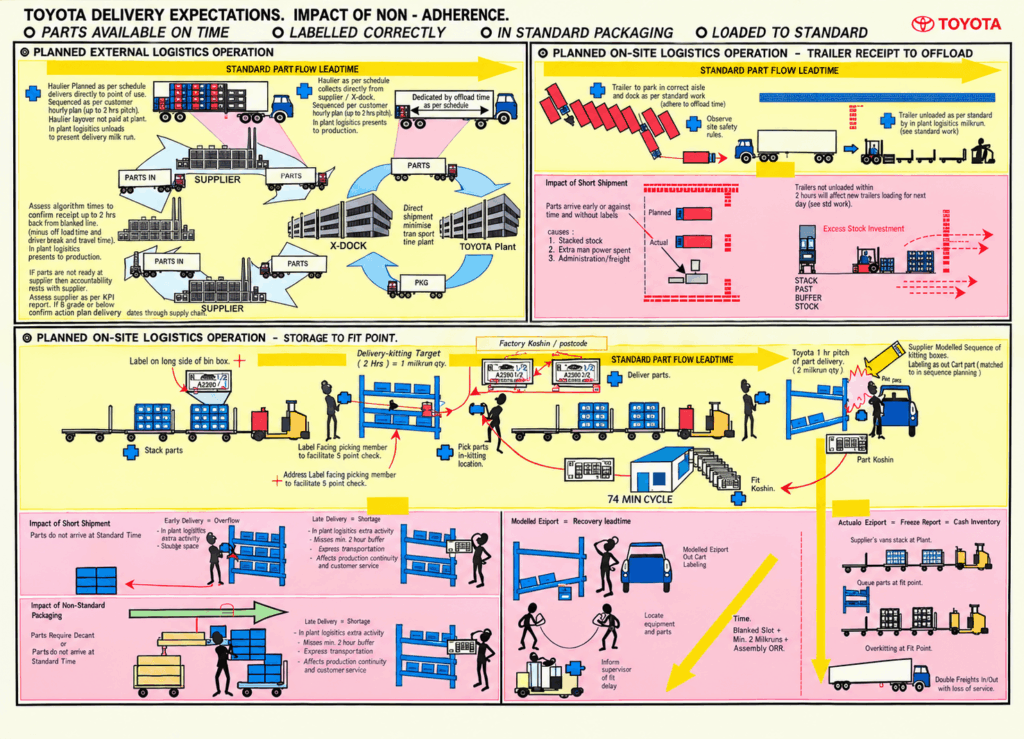
The logistics material goes further towards standardization and management: manifests, packaging, external logistics, on-site logistics, inventory control, point-of-use storage, abnormal conditions and recovery. Furthermore, the progression becomes grasp -> analyze -> design -> implement -> standardize -> manage -> improve.
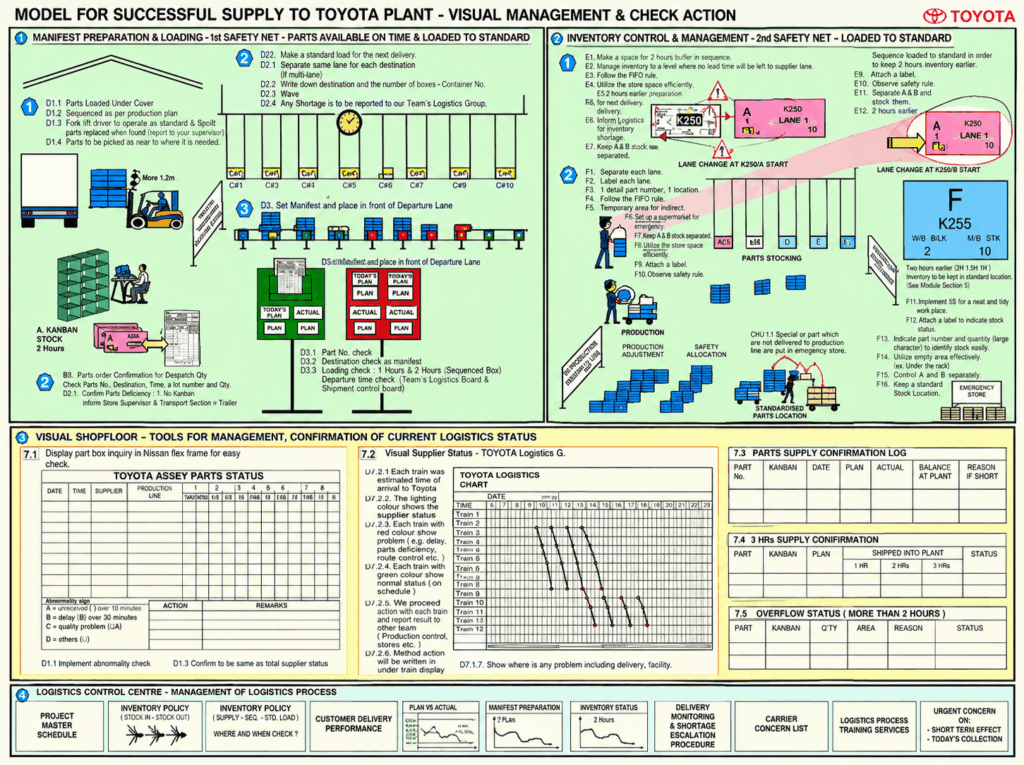
7. WHY DIFFERENT MAPS DO NOT PROVE DIFFERENT METHODOLOGIES
Encountering a Toyota map that does not resemble the familiar Learning to See example does not prove that Toyota MIFA and VSM are fundamentally different. It demonstrates that Toyota adapts the representation to the situation. A map is a model of reality; the information required depends on the problem being investigated.
Comparing the deliberately simple Acme Stamping map with a complex Toyota MIFA and concluding that they must be different methods is therefore a category error. One is a training vehicle for beginners; the other may be the working output of an experienced practitioner analyzing a complex system. Complexity of representation tells us about the problem, scope and user maturity – not necessarily about a different underlying methodology.
Different problem. Different focal plane. Different information. Different map.
A line failing to achieve takt, a supplier holding excessive inventory, a weekly information batch, an engineering change taking twelve weeks and demand amplification across a supply chain are not the same problem. We should not expect one rigid diagram to answer all of them.
Dan Jones’s recollection helps explain why practitioners naturally moved to a different focal plane rather than a different method. Once people could see the material-and-information system within a factory, they faced the next challenge: seeing the connected system across organizations. The title Seeing the Whole reflected the same underlying intent as Learning to See: make the system visible so that people can identify and tackle the right problems.
8. CHANGE THE FOCAL PLANE
Sometimes the right boundary is a process; sometimes a facility; sometimes door-to-door; sometimes the extended enterprise. Seeing the Whole Value Stream, developed by Jim Womack and Dan Jones and subsequently expanded with David Brunt and Matthew Lovejoy, deliberately changes the focal plane beyond one plant to understand supplier-to-customer performance. Local optimization can otherwise increase total lead time, inventory, transport, risk and complexity.
9. FOUR FIELDS MAPPING AND INFORMATION-INTENSIVE WORK
The same logic applies in product development, engineering, service and administrative environments. Four Fields Mapping is one example of changing the representation to understand activities, people, interactions, standards, decisions and time. The question is not whether the drawing conforms to a factory VSM template; it is whether it helps us understand the current condition and design a better one.
10. LEA’S VALUE STREAM MAPPING TEACH METHOD

LEA’s first VSM Teach Poster brings the overall method together: 1) preparation and family analysis; 2) map the current state; 3) apply the eight lean guidelines; 4) design the future state map; and 5) plan, implement and manage. The central PDCA cycle is important: this is an improvement method, not a drawing sequence.
11. THE EIGHT LEAN GUIDELINES ARE DESIGN QUESTIONS

The second VSM Teach Poster captures eight future-state design questions: takt time; finished-goods strategy; continuous flow; FIFO flow; pull/supermarket; schedule one point; interval; and pitch. These are not eight rules for drawing a map. They are questions for designing a better operating system.
The sequence is significant. Shook notes how often mapping teams fail even to address the first question properly: What is customer demand, and what takt time does that imply operationally? Without that, teams can spend days collecting process data and proposing local kaizen without first designing the production system. Overall, the logic is system design first; local process improvement follows from what the future-state system requires.
12. PUT THE APPROACHES SIDE-BY-SIDE — MIFA OR VALUE STREAM MAPPING

The correspondence is not accidental. The methods share intellectual DNA. What varies is codification, focal plane, context and the way organizations have subsequently applied them.
The Danger of Extracting a Tool from its Toyota Context
Jones adds an important caution, consistent with Art Smalley’s observations: a valuable piece of Toyota knowledge can lose much of its usefulness when lifted out of the deeper operating and management context in which it developed. A map does not carry that context with it. The people using it still need to know why they are analyzing the system, how the system is managed, and which performance gap they are trying to close. Without that, the tool risks becoming an end in itself.
Furthermore, Jones is also skeptical of disputes that elevate labels such as MIFA versus VSM, or TPS versus lean, above practical learning. In his email he wryly suggests that some arguments among consultants may have more to do with differentiation and billable work than with solving a customer problem. We would not presume to judge everyone’s motives. The more useful test is the one he proposes: does the debate sharpen our understanding of exactly how the method helps solve the problem at hand? If so, it has value. If not, it is a distraction.
13. SO IS MIFA EXACTLY THE SAME AS VALUE STREAM MAPPING?
If by VSM we mean the process codified in Learning to See, the strongest first-hand evidence is simpler than saying the two merely “belong to the same methodological family”: MIFA and VSM are essentially two names for the same process. The meaningful difference is that Learning to See simplified, structured and democratized Toyota’s approach for a wider audience. If by VSM we mean every workshop, software package and template subsequently marketed under that label, then no. In short, much of the confusion arises because a method for learning to see and redesign a material-and-information system was sometimes reduced to a mapping ritual.
14. A BETTER SEQUENCE
- What problem are we trying to solve? – Define the performance or customer gap.
- What is the appropriate focal plane? – Process, facility, door-to-door, enterprise or extended enterprise?
- What do we need to understand? – Material, information, people, quality, demand, time, inventory and decisions.
- Go and see – Describe the facts first-hand. Follow material, information and human action.
- Choose the appropriate analysis – Use the method or combination of methods that fits the problem.
- Grasp the current condition – Make the real system visible.
- Define the target condition – How should value flow?
- Identify obstacles and stagnation – What prevents the target condition today?
- Solve problems – Experiment, learn and adjust.
- Build the management system and capability – Make the new condition manageable and develop people able to find and solve the next problem.
15. MAPPING WITHOUT MANAGEMENT IS NOT TRANSFORMATION
A future-state map sitting on a wall changes nothing. The desired condition has to enter the management system: ownership, visual performance, leader standard work, problem solving, review and coaching. This is why LEA places VSM within the Lean Transformation Framework: purpose, process, capability, management system and basic thinking.
Dan Jones’s recollection brings us back to the purpose behind the titles: learning to see a system, then seeing the whole system, so that the problems worth solving become clearer. The lesson from Toyota is not to defend a label but to retain the context, questions and practical discipline that make the method useful.
Conclusion: the Map Serves the Thinking – MIFA or Value Stream Mapping
Toyota’s Material and Information Flow Analysis (MIFA) and the Value Stream Mapping (VSM) process codified in Learning to See should not be presented as competing methodologies. John Shook’s own clarification is unequivocal: MIFA and VSM are essentially two names for the same process. Learning to See did not invent an alternative to Toyota practice; it made a Toyota system-improvement approach teachable and available to a much wider community.
The more useful distinction is between the method and the way it is practiced. MIFA/VSM is fundamentally a two-dimensional analysis of the flow of the thing/work and the control information that directs it. Its design questions start with customer demand and takt, work through the architecture of flow and pull, and only then lead to process improvement. Other dimensions can be added when the problem requires them. A more complex Toyota map is therefore not evidence of a different method; it is often evidence of a more complex problem or a more experienced user.
But Toyota’s examples also show that not every map should look the same, because not every problem is the same. Start with the problem. Choose the focal plane. Go and see. Follow material and information. Grasp the current condition. Design a better condition. Solve the obstacles. Build the management system. Develop people.
The map serves the thinking. The thinking does not serve the map.
The objective was never learning to map. It was learning to see.
One final thought – inside the cover of Learning to See there is a statement: Whenever there is a product for a customer, There is a value stream. The challenge lies in seeing it. We think much confusion would be eliminated if only we recognized, “every situation has a problem. The challenge lies in seeing it.”
Acknowledgements – MIFA or Value Stream Mapping
Our thanks go to Dan Jones and John Shook for the exchanges that have helped us put this article together. This is also a history in which we have been fortunate to participate. David Marriott worked directly within Toyota supplier development, learning and applying Material & Information Flow as part of Toyota’s approach to developing suppliers. David Brunt worked alongside Dan Jones and John Shook as lean thinking and practice was being researched, developed and shared with a much wider community.
We therefore care deeply about accurately recording both the history and the original intent behind these learning processes and materials. These are not simply questions of terminology. They concern how knowledge developed within Toyota was understood, translated, taught and ultimately made accessible to many more people.
As Dan reminds us, there is always a danger in extracting a piece of knowledge from Toyota without understanding the deeper context in which it was developed and used. None of us can control how learning processes, methods and materials are subsequently interpreted or applied. What we can do is share their origins and original intent, reflect on what makes them effective, understand why they sometimes fail in practice, and continue to improve the way they are taught.
Lean Enterprise Academy’s Purpose
That is central to the purpose of the Lean Enterprise Academy. Our aim is not to create another proprietary version of lean, nor to distinguish ourselves through new terminology. It is to democratize lean thinking and practice: making the underlying thinking accessible to more people while preserving the depth, context and problem-solving intent that made it valuable in the first place.
In that spirit, the purpose of this article is not to have the final word on MIFA versus VSM. It is to help practitioners understand where the thinking came from, what it was intended to accomplish, and how to use it more effectively to solve the problems they actually face.
Selected references for MIFA or Value Stream Mapping Article
Rother, M. & Shook, J. (1997), Learning to See. Lean Enterprise Institute. Introduction states that the method called Value-Stream Mapping in the workbook is known at Toyota as Material and Information Flow Mapping.
Womack, J.P. & Jones, D.T. (1996), Lean Thinking. Simon & Schuster / Free Press.
Womack, J.P., Jones, D.T., Brunt, D. & Lovejoy, M., Seeing the Whole Value Stream. Lean Enterprise Institute.
Shook, J., “Misunderstandings about Value-Stream Mapping, Flow Analysis, and Takt Time”, Lean Enterprise Institute.
Toyota Motor Manufacturing (UK) material and information flow / supplier-development materials reproduced from the authors’ working archive.
Lean Enterprise Academy, Value Stream Mapping Teach Poster and 8 Lean Guidelines Teach Poster.
THE AUTHORS


Read more
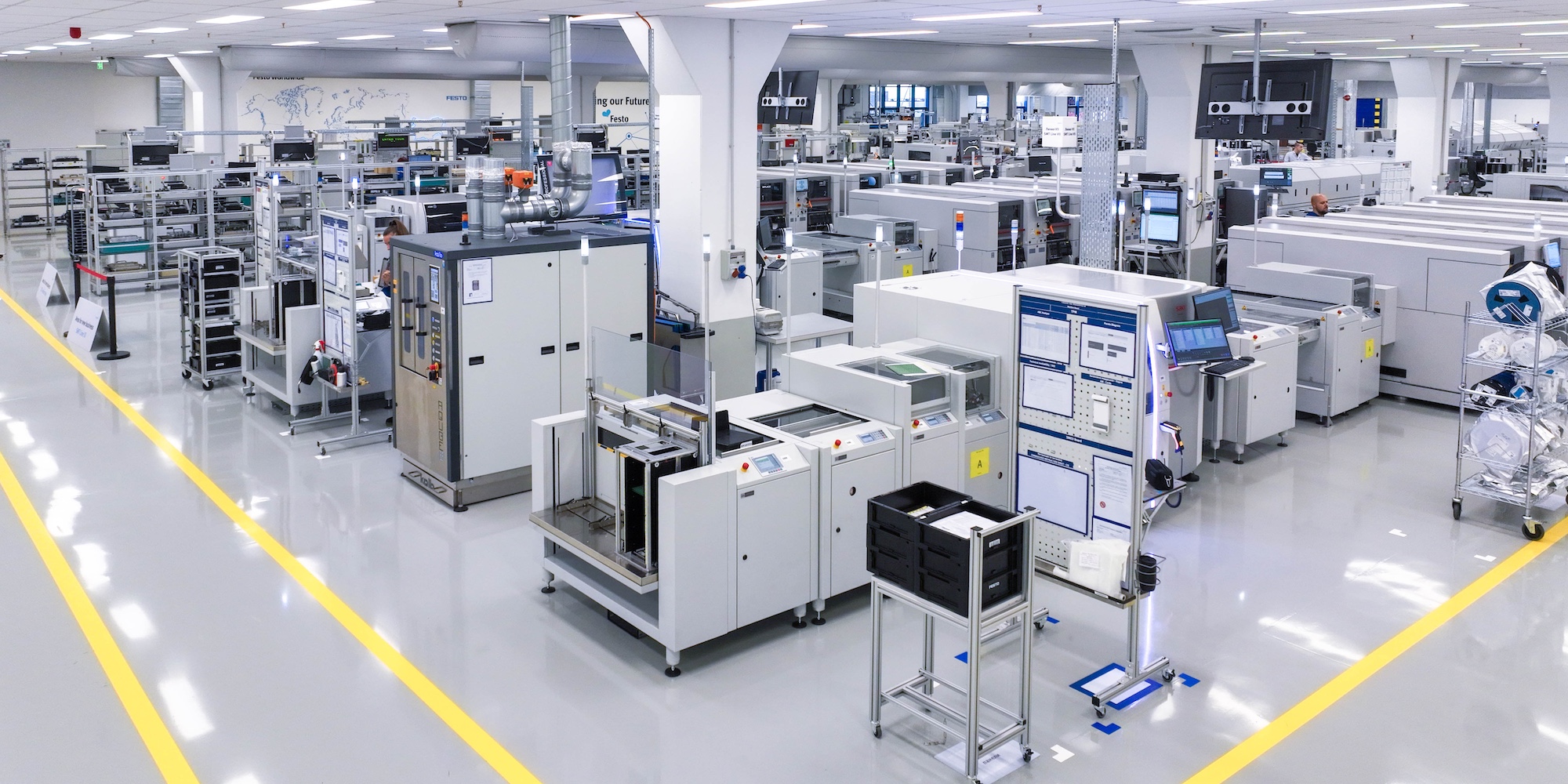

INTERVIEW - Festo’s lean journey improved competitiveness by embedding Lean into daily operations, strengthening leadership engagement, accelerating innovation, and turning Bulgaria into an internal hub for innovation.

INTERVIEW – Planet Lean interviews Silvia Cespa of Italy’s Banca Nazionale del Lavoro, a bank that boasts one of the most advanced IT departments in Europe. How did it get there? Through a six-year transformation towards lean banking.
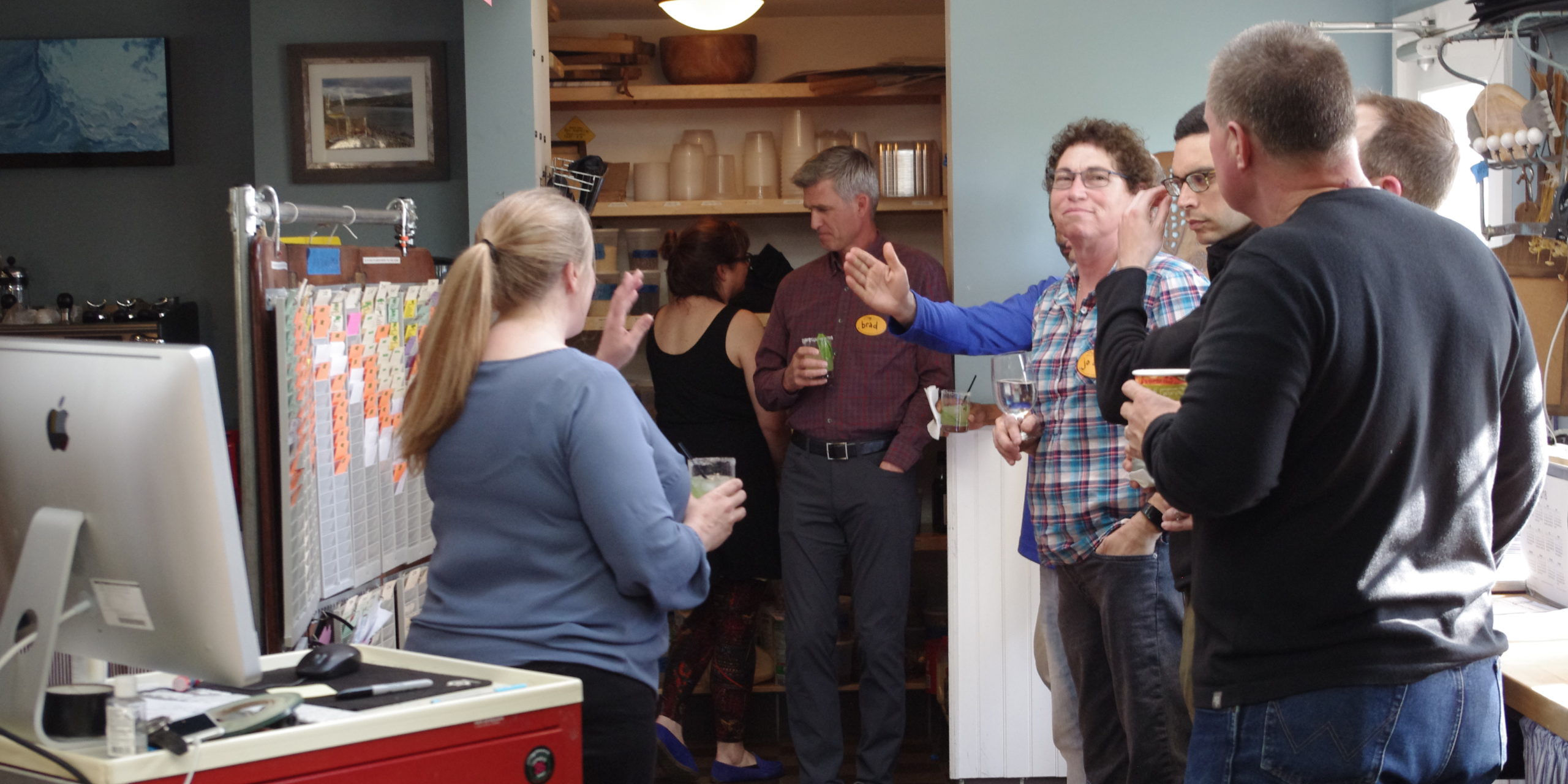
CASES STUDY – Struggling to win the hearts and minds of his people, the author took lean home, learned as much as he could about it and brought it back to his business with the idea of making everybody's lives easier.

FEATURE – We spend a lot of time talking about innovation, but what is the actual impact of leveraging lean to achieve it? As the author points out, the potential is huge, provided certain conditions are met.
Read more

FEATURE – Lean thinking is increasingly applied end to end, reaching virtually every area and function of the enterprise, and yet in many companies IT is still left out of the lean transformation. Isn't this dangerous in a world that is going more and more digital?

INTERVIEW - What happens in an organization after a move from silos to value streams? In this video, a Value Stream Manager from a Brazilian cancer treatment center shares her experience.
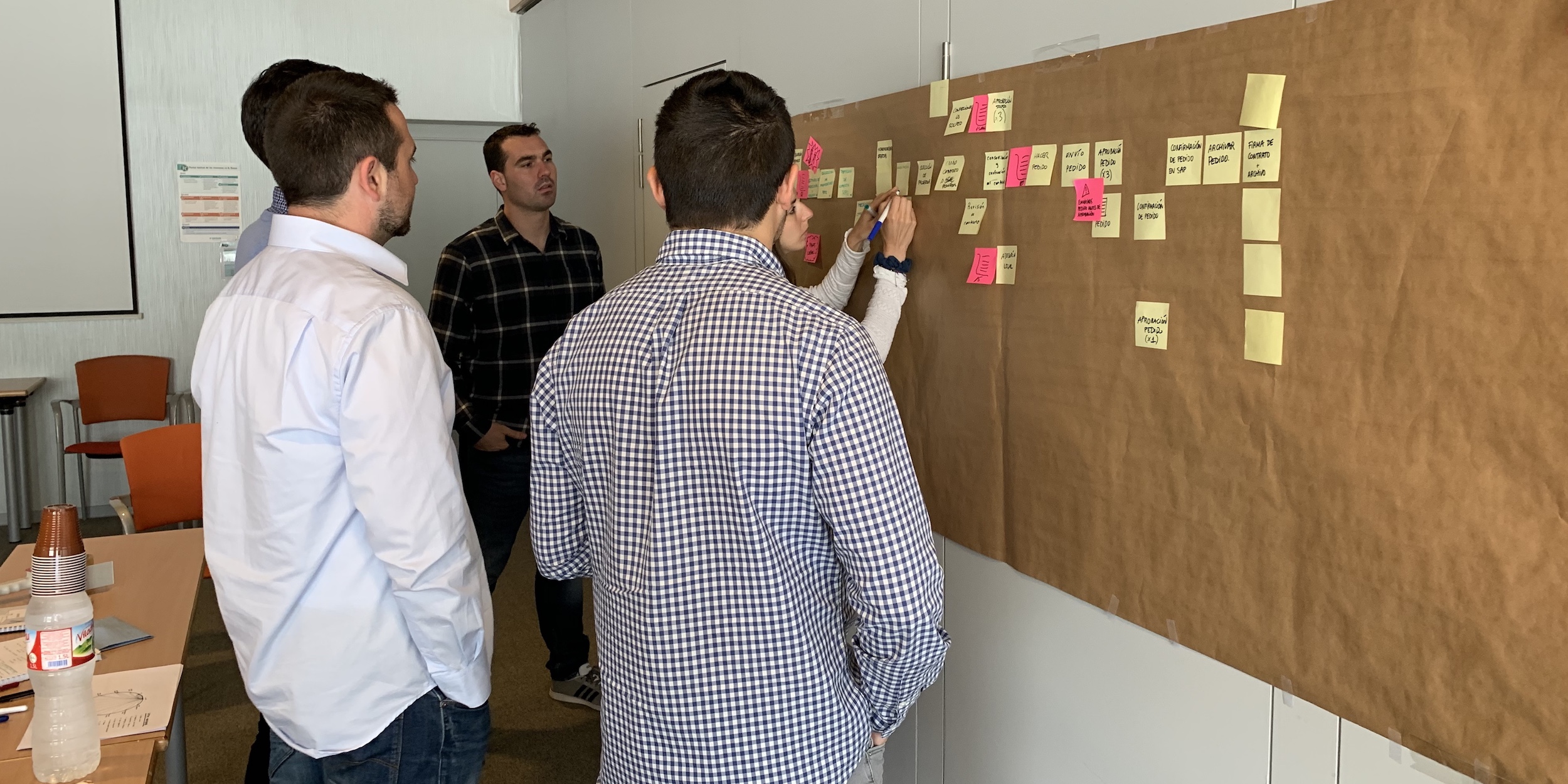
THE NAKED GEMBA – Value stream mapping is a fundamental tool in any lean transformation. The author takes us the most common mistakes companies make using it, so that you can avoid the pitfalls.

FEATURE – The continuous flow of developing people’s capabilities throughout their studies and careers is lacking, to say the least. It’s time we saw this as one big value chain.