


Lean Tech Voices: Will AI force organizations to rediscover Lean?
COLUMN – In this column, three lean and technology experts respond to the same pressing question shaping today’s tech/AI debate. This month, we ask whether AI will force more organizations to embrace Lean Thinking.
Words: Theodor Panayotov, Erasto Meneses and Marie-Pia Ignace
THE QUESTION
This World Economic Forum paper explicitly shifts the discussion away from technology towards organization design, suggesting that scaling AI requires a rethinking of decision ownership, operating structures and governance mechanisms. If value only emerges when workflows, decision-making and management systems are redesigned end-to-end, are we not describing — implicitly — what Lean has been about all along? So… Is AI forcing organizations to rediscover Lean?
THE ANSWERS

The WEF's new paper on AI and organizational transformation makes a pivot worth pausing on. Its argument is that scaling AI isn't a technology problem, but an organizational one. Value only shows up when workflows, decision rights, and operating models are redesigned end-to-end—with humans in the lead, continuous experimentation, and learning loops embedded into execution.
Read that list again. We've heard a version of it before. Toyota called it the Production System. Everyone else called it Lean.
The overlaps are real, if imperfect. Continuous improvement loops echo PDCA at higher cadence. Cross-functional teams owning end-to-end outcomes is what value-stream thinking was always reaching for. Putting humans in the lead, with judgement and accountability at the center, is an expression of respect for people—the genuinely radical part of Toyota's system, and the principle most organizations get wrong when trying to embrace TPS. The WEF's organizational principles aren't a discovery; they are a re-statement, in AI vocabulary, of management ideas that have been mature for decades.
This is why the failure pattern is also familiar. The paper notes that only around 15% of organizations use AI to fundamentally redesign work. The rest collect point gains that don't compound. Companies bolted Six Sigma belts and kanban boards onto unchanged hierarchies for twenty years and wondered why the numbers refused to add up. They're now bolting copilots and agents onto the same hierarchies, and the early signs are similar.
So far, it sounds familiar enough. However, the analogy stops being useful at some point, and it's worth being honest about when that happens.
Lean is built around fairly stable production environments where variability was something to be reduced through standard work. AI systems can read variability as information about latent conditions and adapt to it—that's a different posture, not just a faster one. Lean optimized the cell, the line, the plant; AI can close loops across plants, suppliers and customers simultaneously, which is what Lenovo's iChain or Essity's procurement agents in the WEF case studies are actually doing. And Lean's biggest problem—transmitting tacit knowledge beyond physical proximity—is exactly what AI knowledge systems are now beginning to make easier to handle. That's the problem we're working on at Ethermind, and it's the one piece of the Toyota system that travelled poorly.
AI also introduces problems Lean never had to think about: model drift, hallucination, accountability when an agent acts autonomously, governance of non-deterministic systems. “Same problem, better tools” would be a comforting line, but it’s not quite true.
My honest reading is this: the organizational principles the WEF describes overlap heavily with Lean, which tells us the hard part isn't new—most organizations never mastered the original. AI raises the stakes and adds genuinely novel problems on top. Companies that struggled with TPS for thirty years won't find AI transformation easier. In fact, they will encounter the same underlying problem—only with sharper tools, higher stakes, and fewer excuses.

For years, organizations believed that digital transformation was primarily a technology challenge. The assumption was simple: adopt new platforms, automate processes, implement the new digital tech, and better results will naturally follow. But reality has shown something very different: technology alone rarely transforms organizations. In fact, in many cases, it simply accelerates existing dysfunctions.
This is why I believe AI is forcing companies to rediscover Lean Thinking, and perhaps even expand on it.
Fundamentally, Lean has always been about how organizations learn, make decisions, create value, and adapt. Long before AI entered the corporate agenda, Lean was already challenging organizations to rethink workflows end-to-end, eliminate friction, clarify ownership, shorten feedback loops, and develop people capable of solving problems continuously. What is changing now is the speed and scale of this shift.
Generative AI is exposing organizational weaknesses that many companies were previously able to hide behind hierarchy, bureaucracy, and manual work. Poor decision flows, fragmented customer journeys, disconnected teams, unclear standards, and weak management systems become dramatically more visible when AI enters the equation. Organizations quickly discover that automating waste still produces waste, only faster.
This is where Lean becomes highly relevant again, but in a broader sense than many executives traditionally imagine.
Lean is not just about efficiency. It is about designing systems capable of continuous learning and adaptation. Practices such as visual management, PDCA, value stream thinking, daily management, and coaching leadership were always intended to improve the quality of decisions, accelerate learning cycles, and connect strategy to execution. These are exactly the organizational capabilities required to scale AI successfully. In this sense, AI is not replacing Lean; it’s validating Lean.
More importantly, AI is expanding Lean beyond operational excellence into what could become the management system of intelligent organizations. The combination is powerful: Lean provides the principles, behavioral systems, and management architecture, while AI amplifies analysis, automation, prediction, and decision support. One without the other creates imbalance: AI without Lean can generate chaos faster; Lean without AI may struggle to operate at the speed now demanded by markets and customers.
The organizations that will succeed in the next decade won’t be the ones with the largest AI investments. They will be the ones that are also capable of redesigning how people, technology, and workflows interact around value creation. That requires leadership systems built on experimentation, learning, adaptability, and respect for people, principles that Lean has defended for decades.
Perhaps this is the real shift happening now: Lean is no longer only a pathway to operational excellence. It is becoming the generative foundation for organizations that want to thrive in the AI era.

In 2025, despite being one of the most advanced organizations in the field, BNP Paribas estimated that only 25% of its AI use cases generated measurable impact. Across industries, businesses are discovering that deploying AI at scale produces disappointment at scale—not because the models underperform, but because the organizations around them do not change.
This WEF paper puts this plainly. Scaling AI requires “a rethinking of decision ownership, operating structures and governance mechanisms.” Value only emerges when workflows are redesigned end-to-end, when accountability is explicit, and when learning becomes a continuous organizational capability. Technology is not the limiting factor… the organization is.
Consider the management system alone. When an AI model flags a production anomaly in real time, it renders obsolete the weekly review meeting where the supervisor used to be the information bottleneck—but only if someone has redefined who decides, at what threshold, and with what authority to act. Without that redesign, the alert sits unattended. In such a situation, the model performs, but the organization doesn’t. This is exactly the kind of organizational disconnect Lean is designed to surface.
The fact that Lean provides the mindset, tools and methods that can improve processes even in a tech domain is well known. What’s worth emphasizing, however, is that Lean may offer the best framework to address AI absorption. Models like the Lean Transformation Framework can diagnose our current state and provide the sequence of actions we need to take to fulfil the promise of an AI transformation. They tell us where to look, what to change first, and how to know whether the change has taken hold.
But if such endeavors are to succeed, a genuine collaboration between lean practitioners and AI experts will be necessary. Today, it barely exists. Lean practitioners bring to the table a deep understanding of the work—how value flows, where decisions are made, why the gap between work as it is imagined and work as it is done is always wider than the dashboard suggests. On their part, AI experts can provide the technical literacy to distinguish what belongs to human judgment from what technology can handle directly and at scale.
This collaboration requires a new working model, one where the lean practitioner sits at the table when the use case is being designed and the AI expert sits at the gemba before the solution is specified. The organizations that figure this out first will not just have better AI adoption rates; they will have the organizational capability to absorb technological change without losing the human intelligence at the center of it.
Read more
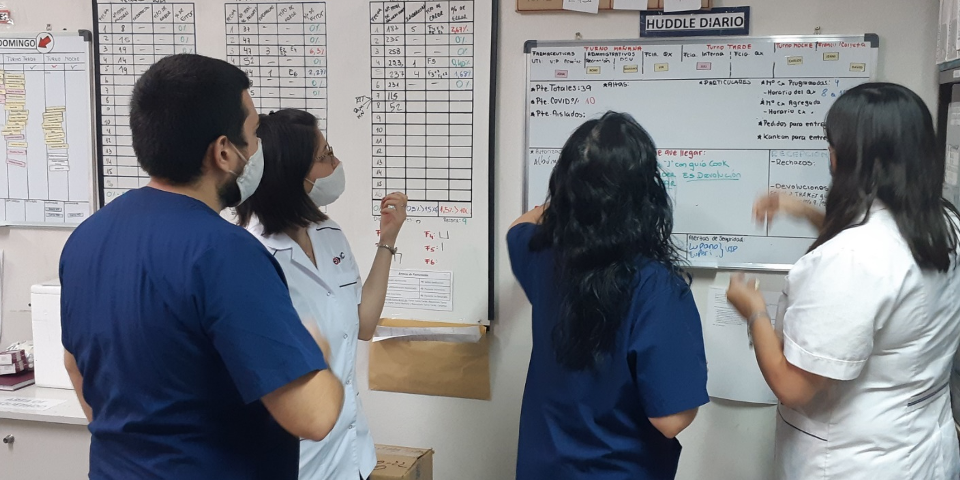

CASE STUDY – This hospital in Argentina has leveraged the power of Lean Thinking to greatly enhance patient care, even in the pandemic, and receive internationally renowned accreditations.

NOTES FROM THE GEMBA – At GHU Paris, leadership pairs strategy with gemba visits, 5C problem-solving, and cross-functional learning to create a resilient, people-centered improvement culture in psychiatric care.
INTERVIEW – From hospitals to start-ups, lean principles have been applied far beyond their origins at Toyota. This article discusses how lean can be applied to learning – specifically, how we can apply lean learning to learning lean.
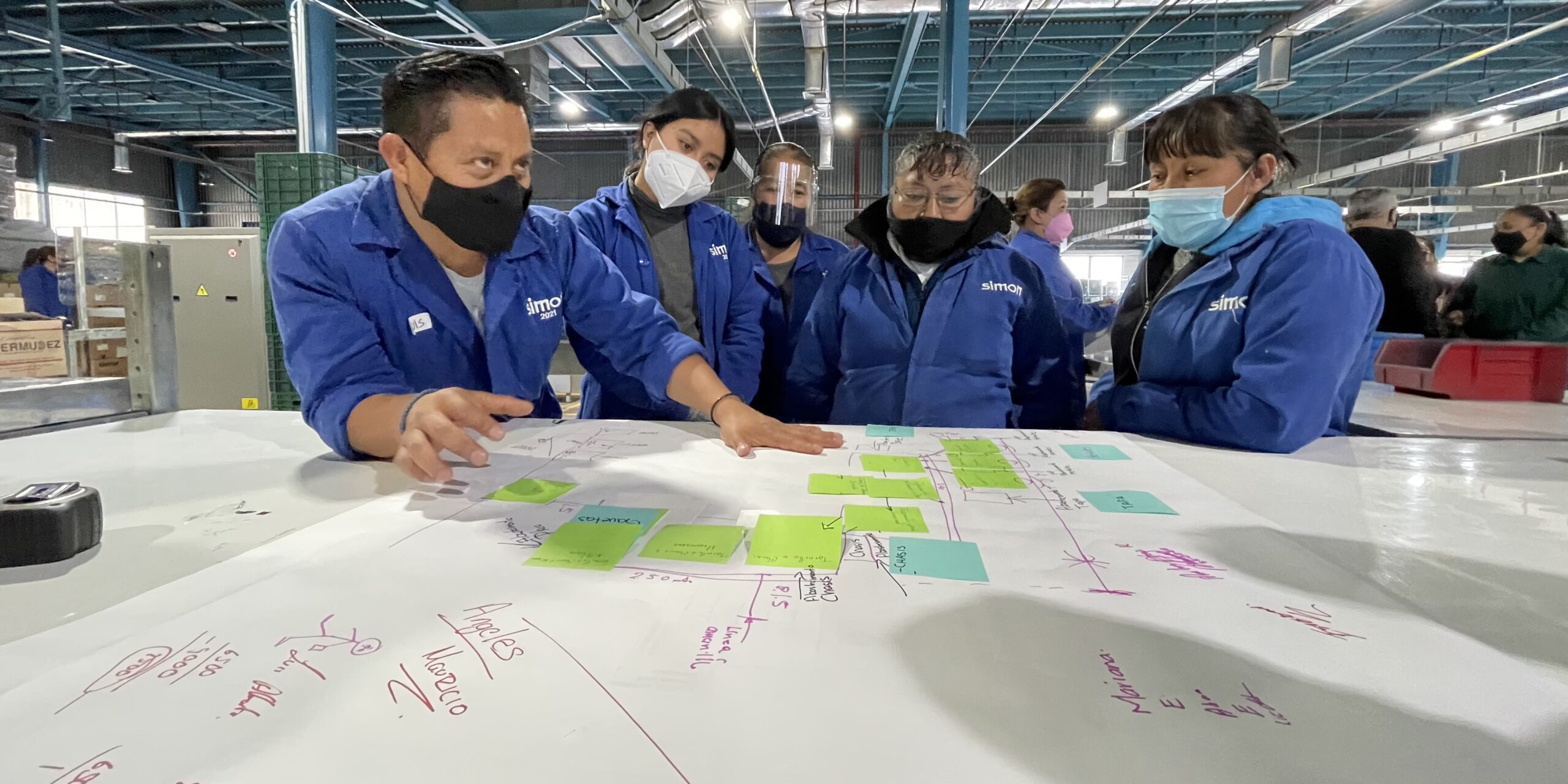
CASE STUDY – Starting in January this year, the Mexican plant of this manufacturer of lighting and electrical solutions has initiated a lean transformation that has already led to impressive results in terms of productivity.
Read more
COLUMN – In this column, three lean and technology experts respond to the same pressing question shaping today’s tech/AI debate. This month, why you are not seeing any return on your AI investment.
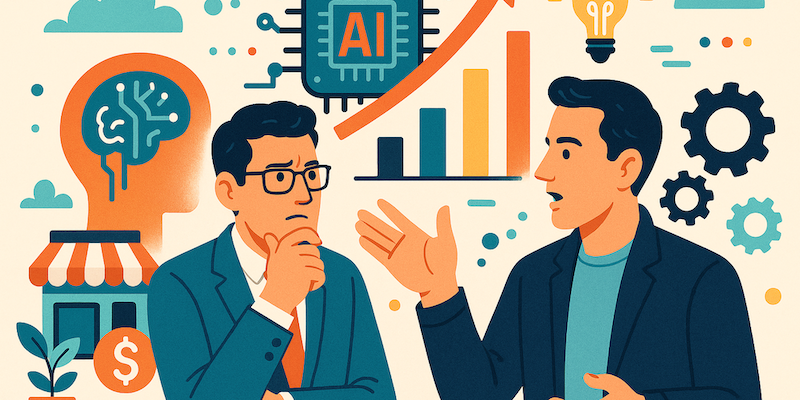
INTERVIEW – AI will shrink companies and workflows, challenging human relevance. In a world of accelerating technological disruption, Lean Thinking and adaptability are more important than ever.

FEATURE – Toyota’s Woven City provides a blueprint for radical innovation based on a three-level learning architecture and “kakezan” partnerships, enabling experimentation, real-world validation, and scalable value creation.

CASE STUDY – The author shares an account of LEGO Manufacturing kft.’s lean and digital transformation, showing how lean foundations, careful digital adoption, and human ownership combine to deliver sustainable improvement.