


Just say the word: Detectability
FEATURE - In this series based on his latest book What’s Lean?, Michael Ballé explains lean terms, from the most common to the least known, to uncover the meaning and thinking behind them.
Words: Michael Ballé
Roberto Priolo: The message behind this glossary term is that the ability of a process to identify defects is just as important as its capability to produce good output . Can you explain how these two elements interact with one another?
Michael Ballé: If you know the physical and mechanical principles that make a process work but not its failure mode, can you claim to know the process at all? Granted, this is how many executives and most consultants work, but is it knowledge?
To really understand how something works, seeing it when everything goes right isn’t enough. A process often looks smooth and obvious in ideal conditions, but that can be misleading. The deeper understanding comes when you also see how and why it breaks. Failures reveal parts of the system that are normally hidden—weak points, assumptions, and dependencies you might not notice otherwise.
When something fails, you can ask: What exactly went wrong? Was it a mistake in the steps, a missing condition, or an unexpected situation? By tracing the source of a failure, you start to see the internal structure of the process more clearly. It’s like learning how a machine works by opening it up after it stops running—you suddenly see how the pieces fit together and which ones matter most.
It’s also important to notice the context in which failures happen. A process might work perfectly in one situation but fail in another because of changes in timing, environment, or inputs. Understanding these patterns helps you predict when problems are likely to occur, instead of being surprised by them. Over time, this builds a more realistic and complete picture of how the process behaves in the real world.
Challenger exploded because an O-ring seal failed at lower than usual temperature. Deepwater horizon blew up because a blow-out preventer failed to seal the well. At Fukushima, the back-up diesel generators failed to work after having been flooded by the tsunami. Most catastrophes have a single point of failure that triggers a cascade of problems and ultimately catastrophic failure.
If you want to apply this thinking to something that are currently trying to collectively figure out, we can look at Large Language Models (LLMs) as an interesting case in point. As their process is to statistically pick the next most probable word they’ve learned in their data set, there is no way of detecting where mistakes are going to creep in or even knowing why. So, what should we do with the detectability issue then? Well, most LLM apps out there tolerate a certain level of mistakes but still use humans (in terrible working conditions, I hear) to check and train the model on which errors are okay and which are not. LLM companies hire human contractors to read and label model outputs for safety and quality, and to compare responses so the model learns better behavior. Someone is looking at what the model produced. These workers provide the judgment calls that automated systems can’t handle.
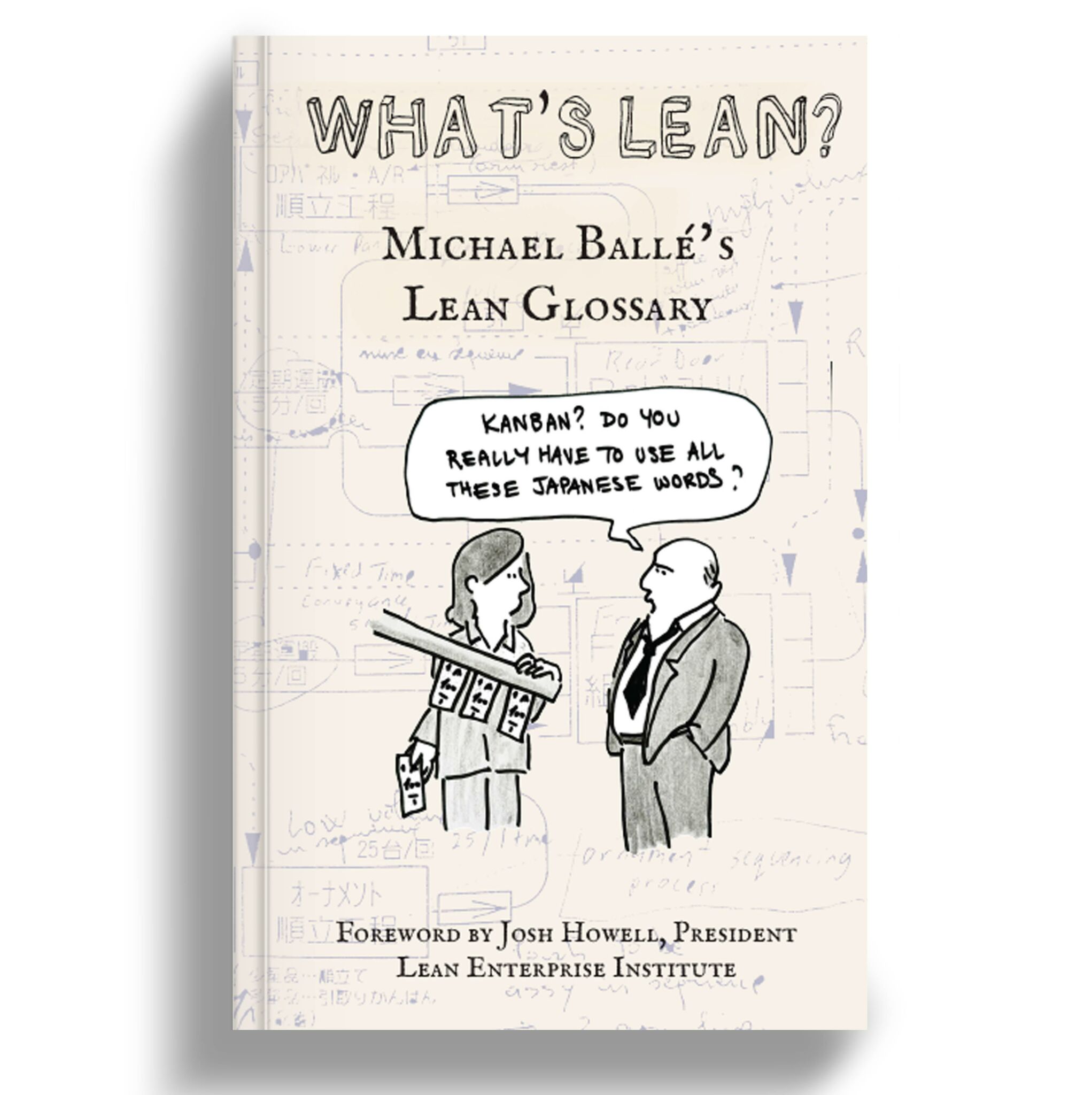
RP: Can you explain the bronze, silver, gold rankings you use in your cartoon?

MB: Imagine looking at every machine in your process and putting a sticker on them:
- “Can spot every defect it produces” gets a gold star sticker.
- “Can spot most defects it produces but misses some” gets a silver sticker.
- “Can’t spot any defect it produces” gets a bronze sticker.
Now do the same on capability:
- “Produces only good parts” gets a gold star sticker.
- “Produces almost only good parts” gets a silver sticker.
- “Produces mostly good parts” gets a bronze sticker.
As having two stickers per machine is a bit confusing, we can blend both measures and say your gold machines are those that can spot every defect they produce and produce only good parts, silver stickers are for machines that spot most defect and produce almost only good parts, and bronze is for every other machine.
By walking through the workshop and putting simple stickers on each machine, everyone has an understanding of how well each machine performs and how well it detects its own defects. It also helps make hidden problems visible. People often know which machines are troublesome, but the stickers turn that private knowledge into something the whole team can understand together. Once a machine has a bronze sticker, the conversation naturally becomes “What’s going wrong here?” and “How can we move this machine up to silver or gold?” Thinking this way helps to build an improvement plan over the entire workshop.
Combining both capability and detection into gold, silver, and bronze makes the whole system simpler. You end up with a clear map of your process: gold machines are the strong ones, silver machines are close but need some attention, and bronze machines show where improvement will matter most. In doing so, you establish the norm that all machines should be gold and that any bronze machine should be worked on immediately.
The question behind the gold, silver and bronze stars for each machine is not just a technical matter. There’s a strong gemba attitude behind it, as you need a profound engagement with the technicality of your equipment and truly understand defect modes (if not, it’s all a sham). The commitment to know at which level each of your processes is the first step toward taking responsibility for their operation, and from then on, improving.
THE AUTHOR

Read more


INTERVIEW – Ben Hartman has used lean in his micro-farm in Indiana for six years. Not only did he find in it a way to support his family doing what he loves, he might have also discovered how to transform our food system.

CASE STUDY - In November last year, a town in the West Midlands made the headlines after a survey named it the best place to live in the United Kingdom. Lean may not be directly responsible for the achievement, but there is little doubt it gave its contribution.

INTERVIEW – We chat with the CEO of a construction company in Dubai to learn about the competitive advantage that lean thinking is providing them.
FEATURE – In the second article in our series with Theodo, the CTO tells us about an experiment that showed how problem solving is easier when the job is clearly defined.
Read more

FEATURE – The fifth article in the series Hazards on the road to lean analyzes the role of quality defects in helping to develop a lean management culture in your organization.

MY AHA MOMENTS – Opening a reflective new series on his lean “aha” moments, the author recalls discovering the power of gemba observation to reveal hidden capacity without investment.

FEATURE – The author discusses the practices that can help us make the most of the traditional mantra “go see, ask why, and show respect”.

VIDEO – We constantly talk about the role of leadership, but perhaps we don't realize just how intertwined leadership transformation and business transformation really are. This short video discusses why.