

I can show you, but I bet you can't go home and do it
FEATURE – During a site visit to Halfway Production Centre in Johannesburg, the author is reminded of how learning to see demands coaching and mental-model shifts, not just observation or motivation alone.
Words: Tshepo Thobejane
I recently conducted site visits with a group of lean practitioners following one of our in-house training programs at Lean Institute Africa. One of these visits—to the Halfway Production Centre in Johannesburg—was particularly enlightening.
We started by following General Manager Hashiem Davids, Group Leader Nqobile Ntshalintshali, and Senior Advisor Terry O’Donoghue, as they joined five morning meetings. The first “asakai” started at 7 AM and the last one was completed before 8 AM. After giving us an overview of some of the visual boards used in the morning meetings, Hashiem and Nqobile showed us the process step by step.
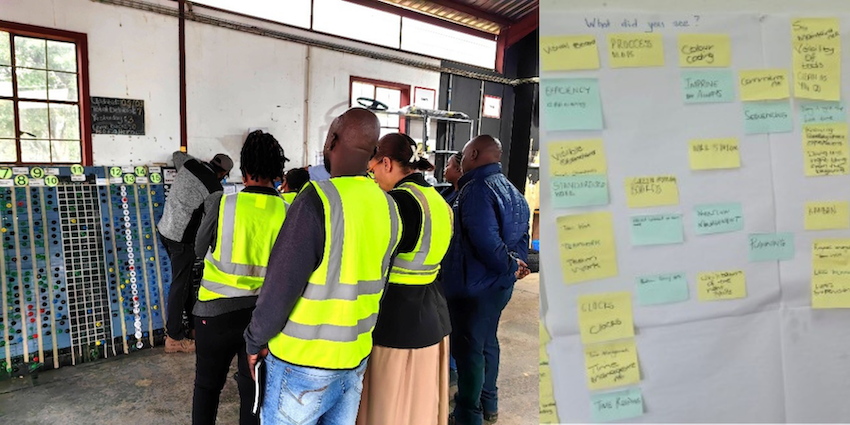
The final activity of the site visit was a reflection exercise facilitated by Terry at Halfway, which left me with many a-ha moments and an appreciation of how lean principles are so simple and yet so easy to miss. The group was asked to answer two questions on sticky notes: “What did you see?” and “What do you believe is our purpose?”
This reflection exercise reminded of this Planet Lean article, in which Art Byrne recounts his early encounters with the Toyota Production System in the 1980s. Working with consultants from Shingijutsu, he and his colleagues came to see TPS as the greatest strategic weapon they had ever encountered. When they asked Shingijutsu's president, Mr Iwata, how Toyota allowed them to teach TPS to others, his answer was disarming: “I can tell you about TPS, I can even take you and show it to you, but I bet you can't go home and do it.”
The questions we were asked in the final reflection at the Halfway Production Centre led me to reflect on the benefits and shortcomings of site visits. What can we take from them? Can we go back to work and replicate what we observe? I think the key benefit of site visits is that they generate the motivation to start a transformation or double down on our lean efforts. They provide firsthand exposure to what is possible and give us confidence in the lean way of managing work. They can also provide a benchmarking reference for those who are already on the journey looking to learn from advanced organizations. On the other hand, the key challenge is whether people on the site visit will fully grasp the principles and the thinking underlying the “best practices” they observe.
Learning to see is a process that begins at birth—infants start by perceiving only light and shadow before gradually developing color vision and spatial tracking over their first months of life. But beyond this physical development lies a deeper, more challenging kind of seeing, one that never ends and that John Shook and Mike Rother write about in their great book Learning to See.
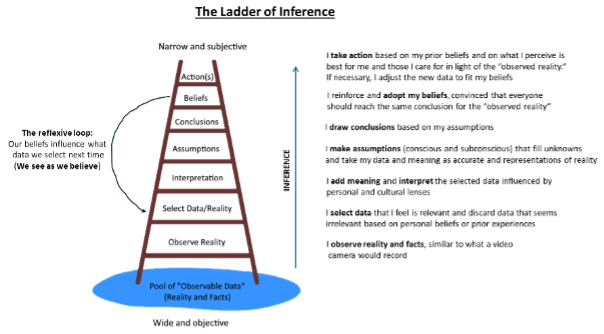
The Ladder of Inference, developed by Chris Argyris in 1974, is one of the available models to help us grasp and recognize the cognitive processes that are involved in the process of seeing. Through this model, we can understand why seeing is not a simple process, as it describes the subconscious thinking process people use to move from a factual observation to a final decision or action. The Ladder of Inference maps the cognitive processes from observing facts, selecting data, adding meaning, making assumptions, forming beliefs, and finally acting. It helps to explain why different people can look at the same data and reach different conclusions, as well as the diversity of the responses to the reflection exercise during our visit to Halfway. Studying the Ladder helps us to uncover the beliefs and assumptions that render us blind despite our visual sight.
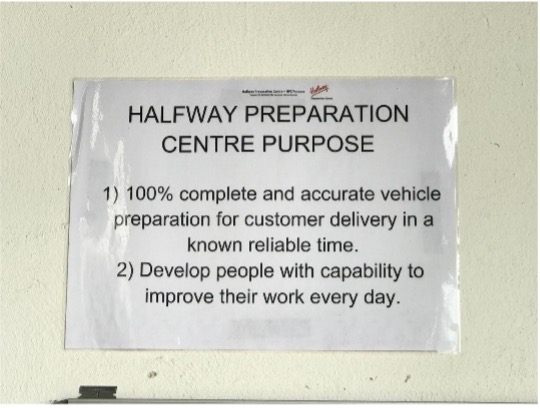
The question the group struggled with most was the one about the purpose of the organization (not shown in the above image). The purpose statement was posted at several of the workstations we visited, but it didn’t catch our attention because we were all mostly focusing on the visible artefacts. Indeed, a company’s purpose is not easy to grasp through basic observation. What was interesting is that it was only after we were shown the purpose statement (see image below) that some of our observations became more meaningful.
For example, we spent some time looking at an impressive visual board used to track vehicles coming in for repairs. It consisted of many columns and different colored pieces, and, at first impression, it looked complex for an outsider. After Nqobile gave us an explanation of the board and its elements, however, we understood how to read it and use it. Impressed by both the simplicity and complexity of the board, I asked Nqobile how they came up with it. She told me that it happened while solving the problem of not meeting promised lead-time to clients. Terry emphasized that the current version of the board was the sixth iteration. It was also clear in some observations that Hashiem was coaching Nqobile, and that Terry was coaching both Nqobile and Hashiem in some of the engagements. I can confidently say that I saw the purpose being lived and actioned during this site visit.
I have come to believe that without such coaching, it can be challenging to know what to do after a site visit or, indeed, a 3–5-day training. Lean is a process of learning, and learning can be messy sometimes. Several accounts from experienced TPS practitioners, especially those who held management roles, indicate that Toyota assigned them a sensei. Without this kind of support, what are the chances that you will sustain new practices when experiments do not immediately yield desired results? And even if the results are immediately visible, isn’t sustaining them another major challenge? I truly believe a sensei can accelerate the journey, but that’s only true if the learner is willing to question what they think they already see.
Perhaps this is what Iwata was really telling Art Byrne all those years ago. The difficulty of going home and applying what we saw is not a lack of information, understanding, or motivation—it is the difficulty of seeing what we do not yet have the mental models to see. Site visits, training programs, and even coaching are all attempts to close that gap. But the first and hardest step is recognizing that a gap exists in our ability to see.
THE AUTHOR

Read more

ARTICLE - Improving healthcare architecture means truly meeting patient requirements. This article reflects on the power of 3P design and looks at an implementation in the North East of England.
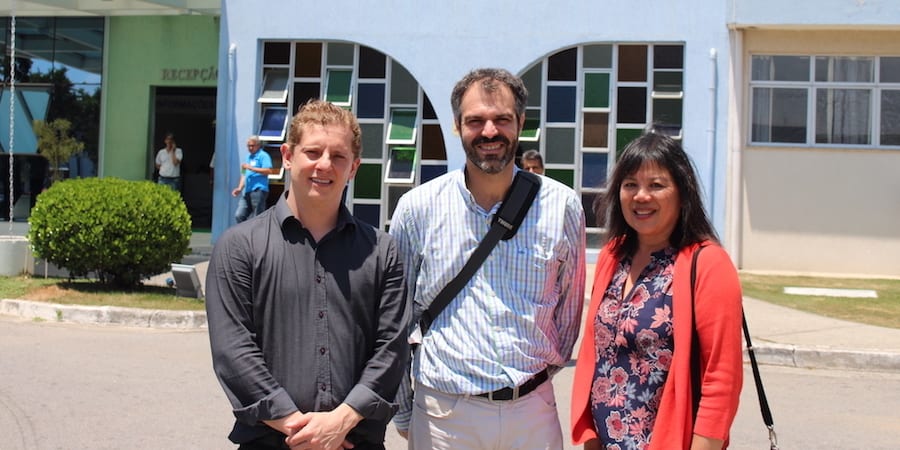
VIDEO INTERVIEW – Last year, the Lean Global Network launched an initiative to leverage the knowledge of our institutes to positively impact the healthcare industry. We caught up with the group in São Paulo this week.

FEATURE – In the face of uncertainty, when it’s hard to see the road ahead, we can still make things better day after day by embracing kaizen – until we are out of the woods.

INTERVIEW – At the recent UK Lean Summit, we met the Head of Student Services of an English high school. We asked her about the interesting work the school is doing to improve the delivery of education to students with special needs using lean thinking.
Read more
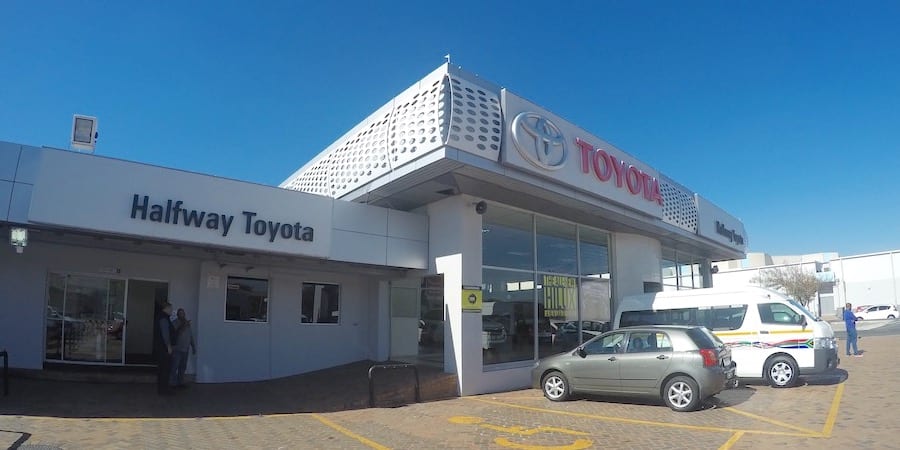
FEATURE – For the first article in our series on the Halfway transformation, we asked the Sales team to tell us about how they apply lean to selling cars in a challenging social context.
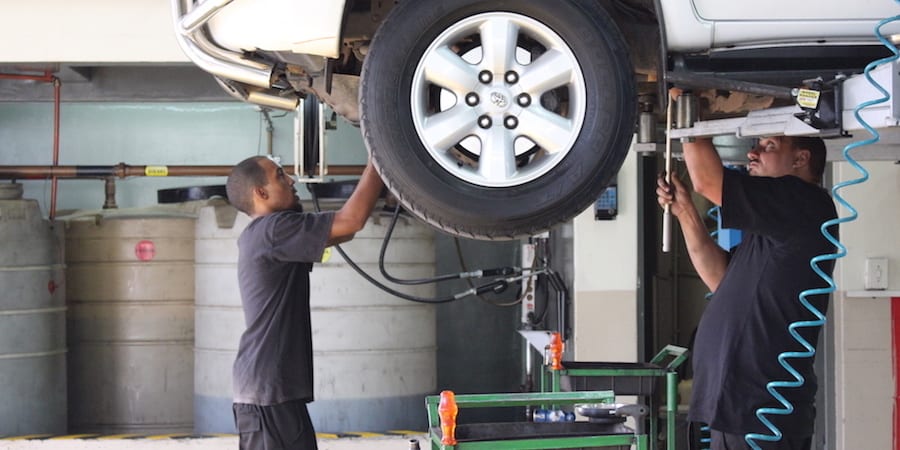
DOCUMENTARY – In PL’s first ever documentary, we share the story of a chain of car dealerships in Africa. Watch and learn how people development and lean leadership made for one of the best turnarounds you’ll ever encounter.

FEATURE – In this intimate, moving account, the author shares her journey of personal transformation that caused her mindset and her attitude towards employees to dramatically change.
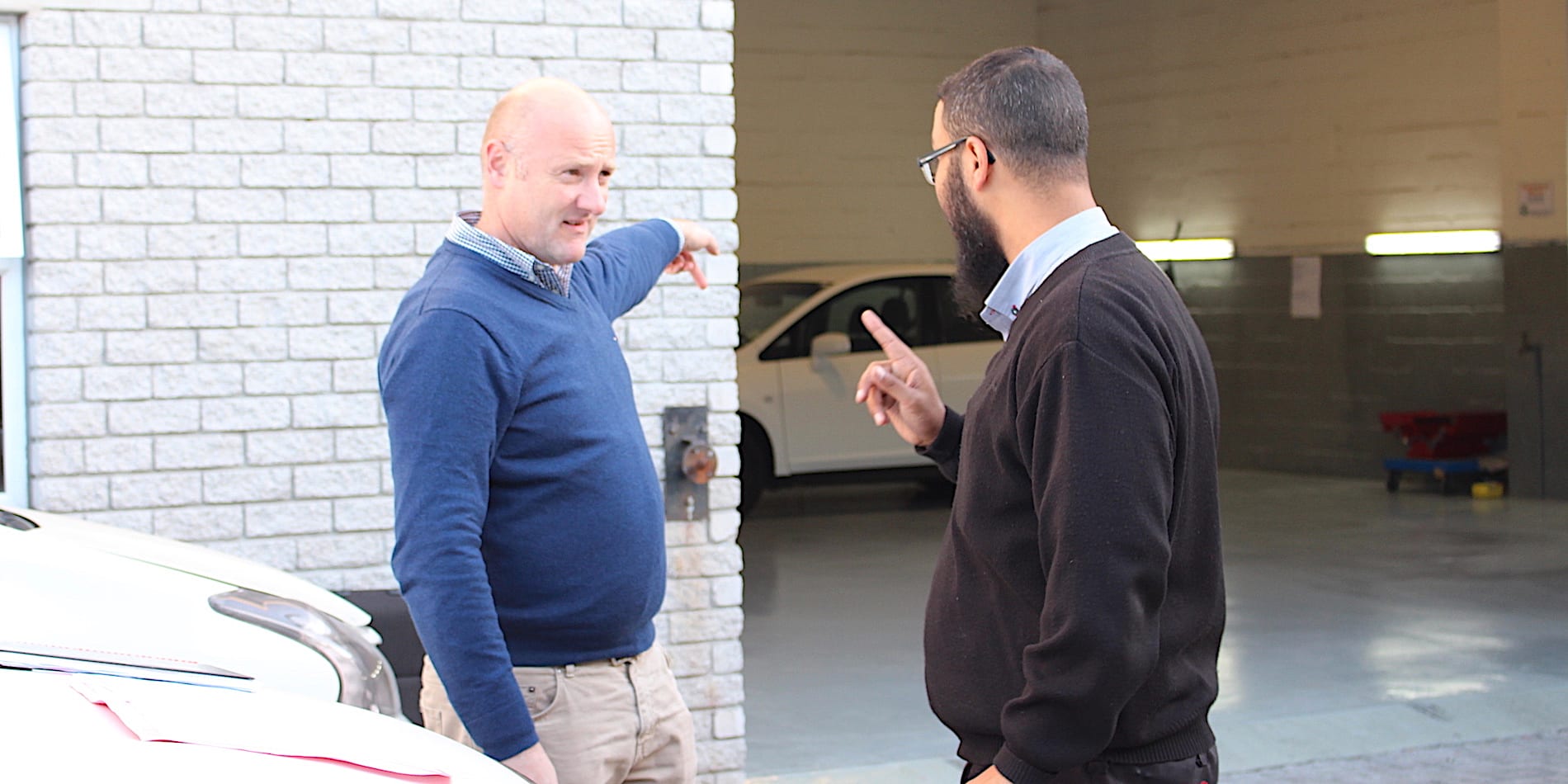
FEATURE – The role of the coach in a lean transformation is an often-debated topic. The author discusses his experience building the architecture of the Halfway turnaround.