


CI&T: lean as a way to develop leaders and manage growth
INTERVIEW – CI&T is a very successful Brazilian IT and software engineering company that has found in lean thinking a way to build on its agile work while better approaching leadership development.
Interviewees: César Gon, CEO, and Bruno Guicardi, Regional President, North America, CI&T
Roberto Priolo: CI&T was founded in 1995, which means it has witnessed huge changes in the IT world. How does its evolution reflect the evolution of the digital world?
Bruno Guicardi: Over time, we have completely changed our business following the shifts we observed in the industry. And what we are doing today is very much a result of this change: from just producing and shipping software to our customers, we are now striving to drive innovation all the way to them, to help them embrace a new era of digitalization and change the way they do their work. At first, we were programmers, and then around six years ago we essentially became a digital agency: it’s a completely different driver for value generation.
We have not been able to do this because we are particularly smart or because we were good at anticipating what was coming. We were just very disciplined in our hoshin efforts: each year we reassess how we can move up the value chain to better serve our customers and help them achieve their goals through our products. Depending on the gaps in our offering that we identify, we add services to our portfolio and new skills in our people.
RP: When did you start applying lean, by the way?
César Gon: Around 10 years ago we started to use agile, and it’s from there that we got to know lean thinking as a philosophy for management. We started to actively implement it some seven years ago.
RP: Agile? What was your experience with it?
CG: It’s great, and it still helps us a lot, but we started to see it as a bit limited for what we wanted to achieve. In a way, agile is a lighter version of lean focused on producing better software in small teams through quick iterations.
BG: Absolutely. Agile has its own PDCA cycles – planning sessions the whole team participates in, reflection coupled with kaizen to understand what to do better in the next sprint, and so on – but scaling those PDCA is where things get difficult. What do you do when rather than one team you have 15? How do you get 100 people to self-organize?
Besides the scale-up problem, we also found that agile didn’t have a big enough focus on leadership development. In fact, in our experience, it was quite the opposite: the product owner is often expected to “know everything” and she tends to run the process as an external expert solving the problem for you. What we needed couldn’t have been more different: we had to develop problem solvers.
RP: We hear this quite a lot. How did your experience change since lean was introduced?
CG: Lean helps you to see the whole value stream. Before you know it, with lean you are no longer only producing software, but looking at how your strategy can turn into great ideas and how those great ideas can translate into actual IT products your customers value. Looking at the whole picture is a very powerful way to solve big issues that you couldn’t even see before: for instance, if software production is perfectly optimized but it still takes you three months to get to that stage, seeing things more clearly helps you make decisions more quickly (in this case, starting to apply DevOps). This normally has a massive impact on lead-times, which we see as the most important metric we track, together with quality.
BG: The work of our programmers didn’t change much in the process, but it started to happen in faster cycles. Now, they do something and it no longer takes a year and a half for them to get feedback. The faster feedback comes, the more frequent improvements will be.
The work that changed is that of the management team. What leaders do has changed completely.
RP: How?
CG: Hoshin is a strategy for our every-day jobs. It’s an easy way to get all leaders involved in what really matters to the business: there is no exec who doesn’t want to participate in strategic discussions, so engaging them in hoshin planning is a great way to get them involved in discussions that directly connected to the gemba, to people’s A3s, and so on. In the process, their mindset starts to change.
BG: Exactly. It took many years to see those changes impact our daily work, but we knew we were the problem when we set out to become a lean organization and turning to hoshin was a necessary step towards ingraining lean ideas in the organization.
RP: I would like to talk about your crazy growth rate – over two decades of continuous growth and currently a 35% rate year on year. How does lean help you manage that?
CG: I think what lean brought us is the idea that we can manage the process of developing the leaders we need to sustain our improvements and growth. The 30-35% yearly growth we are experiencing is a self-imposed speed limit – our takt time for leadership development, if you will. We know that going any faster would prevent us from developing enough leaders to drive the transformation.
RP: Back to the transition to lean thinking… what was that like?
CG: To explain this, we often use an analogy: for a few years, CI&T was a chimera – a mythological hybrid creature normally depicted as a lion with a goat’s head stuck to its back and a tail ending in a snake’s head. So, what was the “Chimera crisis” of 2009? At that time, the lion in our company (our agile studios, which were starting to get traction) was coexisting with the old, traditional Software Factory (the goat). It was like having two different businesses, and the contrast between the two couldn’t have been starker. On top of that, we had a command-and-control mentality at leadership level (the snake), which was of course totally disconnected from our agile and lean efforts. Back then, CI&T had different identities and no clear direction.

In response to this situation, we made the business decision of killing the old goat – this meant shutting down 60% of our business to focus on what brought real value to our customers. That decision was difficult, but rather quick. The snake, however, was much tougher to get rid of: changing leadership is a daunting task that requires time, commitment and patience. To get there, we started to change our own behaviors while slowly trying to get others involved, until lean principles and practice started to cascade down the rest of the organization. Hoshin was instrumental in achieving that.
RP: What is the most difficult part of your transformation?
CG: As far as I am concerned, the discipline you need to keep going, as well as the insecurity that comes with trying to convince others while still learning yourself.
BG: Even when you are a firm believer in the power of lean thinking – which we are – there is always a tendency to slip back into old behaviors. This to me is perhaps the hardest part of a lean transformation: the fact that you are constantly under pressure to not fall back. At the same time, however, perhaps it’s not a bad thing to be kept on your toes.
THE INTERVIEWEES


Read more


WEB SERIES – Today, we launch a new documentary series on lean around the world, with the first season focusing on lean in Brazil. In the first episode, we visit the lean clinic on a mission to reduce the burden on cancer in our lives.
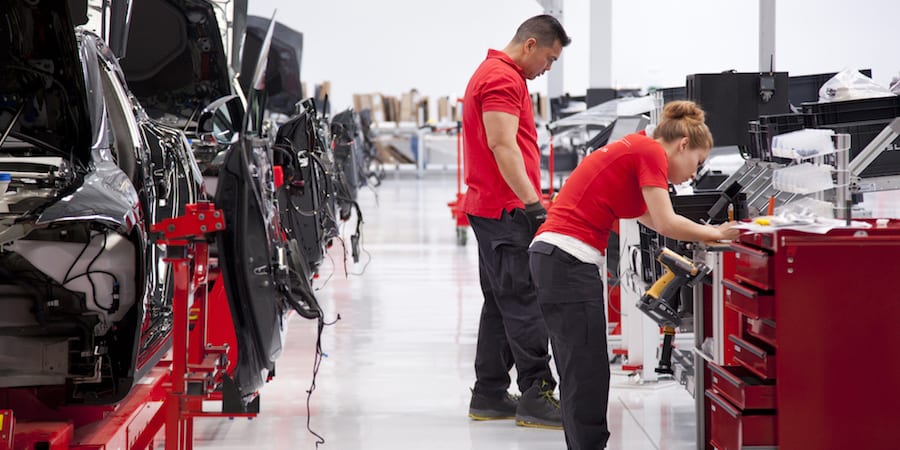
WOMACK’S YOKOTEN – This month, the author looks at the production line, a century-old idea that still fascinates us, reflecting on how lean thinking has changed it.

OPINION – Look at today's disruptive companies and you'll see how all of them have understood that real innovation calls for close proximity to the customer, rather than for stubbornly taking cover in the comfort of the upstream.

FEATURE – An obeya room can be the cornerstone of a lean transformation, but developing a successful visual management environment is easier said than done. Nike’s Technology department shares a few tips.