


Busy is not the same as productive
MY AHA MOMENTS – In the second article of his new sieries, the author addresses the hidden cost of multitasking, explaining why focus—and not constant activity—drives real productivity.
Words: Daniel Halvarsson
“I understand everything we talked about today. It makes perfect sense. I just don’t know if we have time to do any of this in my department right now.”
Tim was still in his seat after the management team had filed out. The whiteboard still held our morning’s diagrams, a rough graph of efficiency dropping as parallel jobs rose. A flipchart in the corner carried the team’s takeaways. We had spent the morning walking through some of the basics of lean management at their US manufacturing plant. Tim had been the most attentive in the room. Now he was sitting alone, staring at his notebook.
I took a seat across from him. “Are you ok?”
He looked up. “The GM is on top of me. We’re losing orders because our lead-times are too long as you know, and more than half of that time sits inside my department. We need to cut the lead-time in half. That’s double the output.”
I liked Tim. He was young, ambitious, and the kind of leader who really cared about his people. I asked whether his team felt the same pressure. He nodded. “Some senior engineers are running nine orders in parallel just to keep up the pace.”
“Nine?”
“Yes. The junior staff is running three to four each. The guys are already super busy. I just don’t see how we have the time to try something new…”
He stopped mid-sentence. He looked down at his notes, then up at me. “My department is the textbook example of multitasking, isn’t it? We can’t afford not to take the time?” He laughed once, tired.
A few days later, Tim called his team into the conference room and walked them through what he had seen. The cost of jumping between orders, the feeling of motion that wasn’t actually progress. He was convinced. They were not. The objection came back the way it always does. How can we cut lead-time by working on fewer orders? That’s the opposite of what we need to do. By the end, Tim had not convinced them, but he had convinced them to try.
So he did something that looked like the opposite of helping. He collected every open order, set a hard limit of two projects per engineer, and made himself the release gate. Nothing new went onto the floor until something came off. When an engineer closed an order, Tim handed them the next one, already prioritized, picked from his own stack, so they did not have to think about which fire was hottest. He carried that weight for them.
The complaints started shortly after. The engineering office was open, with low partitions and no doors. Grunts and muttered complaints carried between the desks. Held orders piled up on the corner of Tim’s desk, and the pressure grew with the pile. Engineers came worried about orders that were not being worked on. The concern grew week by week through the first couple of months, when progress was still small and the change still felt like a mistake about to happen. The pushback was loudest from one senior engineer, who told Tim that what they were doing would push lead-times in the wrong direction and cost them customers. He wanted the team back to the way they had always done it. The safe way.
Tim later told me that he had thought about going back many times in those first months. He was not sure. What he was doing seemed right, and he could not think of anything better, but he always felt the constant pressure from his team. By the second month, he could see what the senior engineer chose not to see: projects already in flight were finishing faster. The numbers were small but they were real. The signs of progress gave him hope. He held the line.
I had learned this the hard way. Some years into my career, with managers reporting to me, I led an ambitious plan with my team: long action lists, tough targets, attention on every front. Six months in, the KPIs had barely moved. So we doubled down. We added more actions and kept ourselves even more busy. It took me a whole year—and the hard work of a whole department—to realize what I already knew and had been taught about multitasking, but had been too busy to act on. Busy is not the same as productive. Tim understood this principle from the start. He saw the cost. He dared to deprioritize for his team so they could finish.
Six months later I ran into Tim. The smile was visible from the other end of the corridor. They had cut total lead-time in the department from sixteen weeks to four. Twelve weeks of pure waiting, gone, without a single new hire.
Tim’s department was not unusual, but Tim was. Since working with him, I have spent years walking into companies that ran the same way: busy enough to make the lights blur, certain their activity was synonymous with productivity, only to wonder why nothing finished on time. The cultural belief is so deep we don’t even argue with it. We hire for it. We ask candidates whether they can juggle several projects at once, and we are pleased when they say yes. The leaders who dare to take things off their team’s plate and to finish what remains, are the ones who treat multitasking as the cost it is, not a badge.
THE AUTHOR

Read more
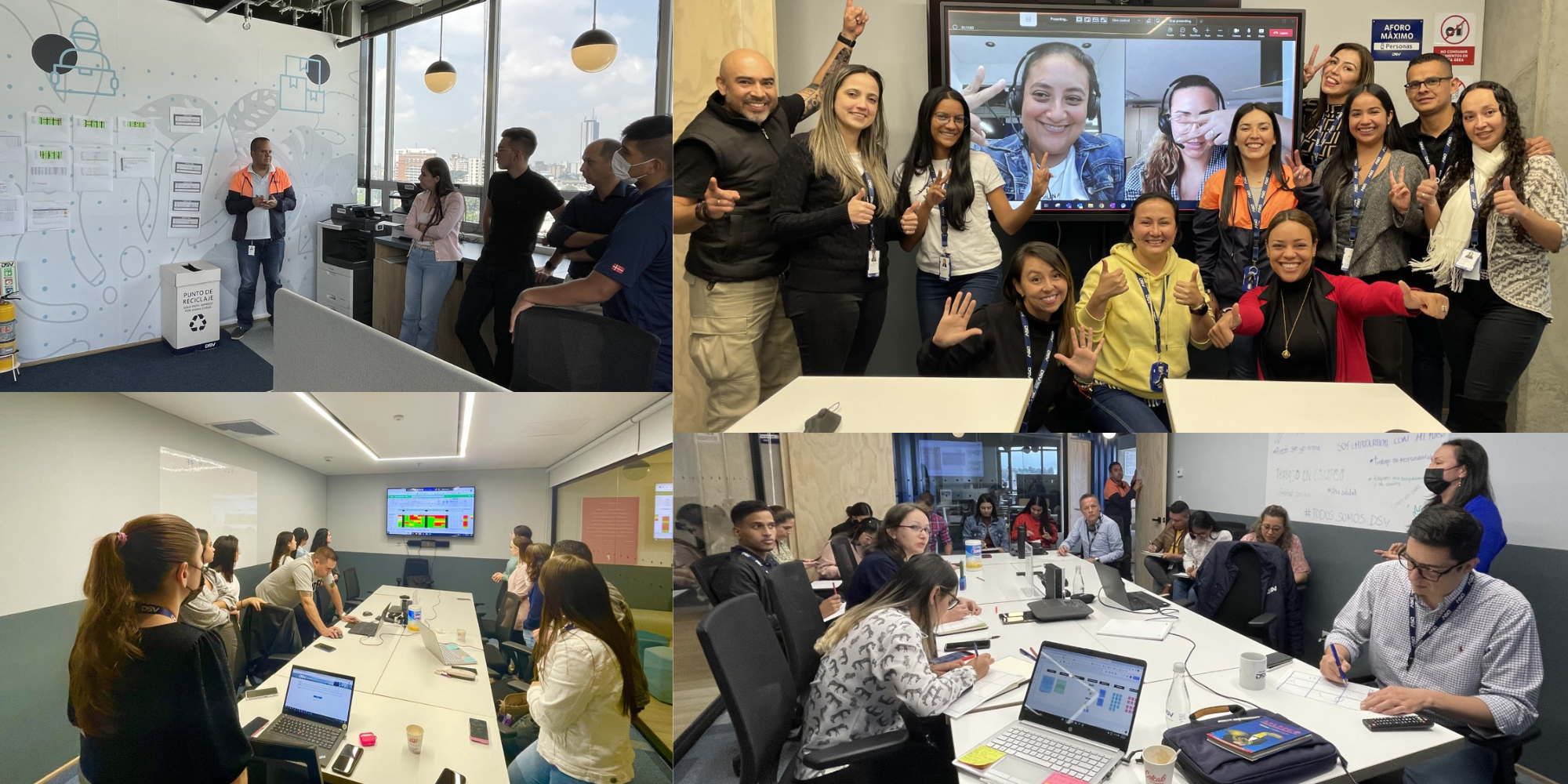

CASE STUDY – This transport and logistics company in Colombia has turned to Lean Thinking to become more adaptive and ensure an easier post-acquisition integration of new cultures.

FEATURE – In a transformation, should we spread responsibilities across the business or go for a centralized Lean Office? For their second piece, our Polish colleagues look at what they have learned on the field.
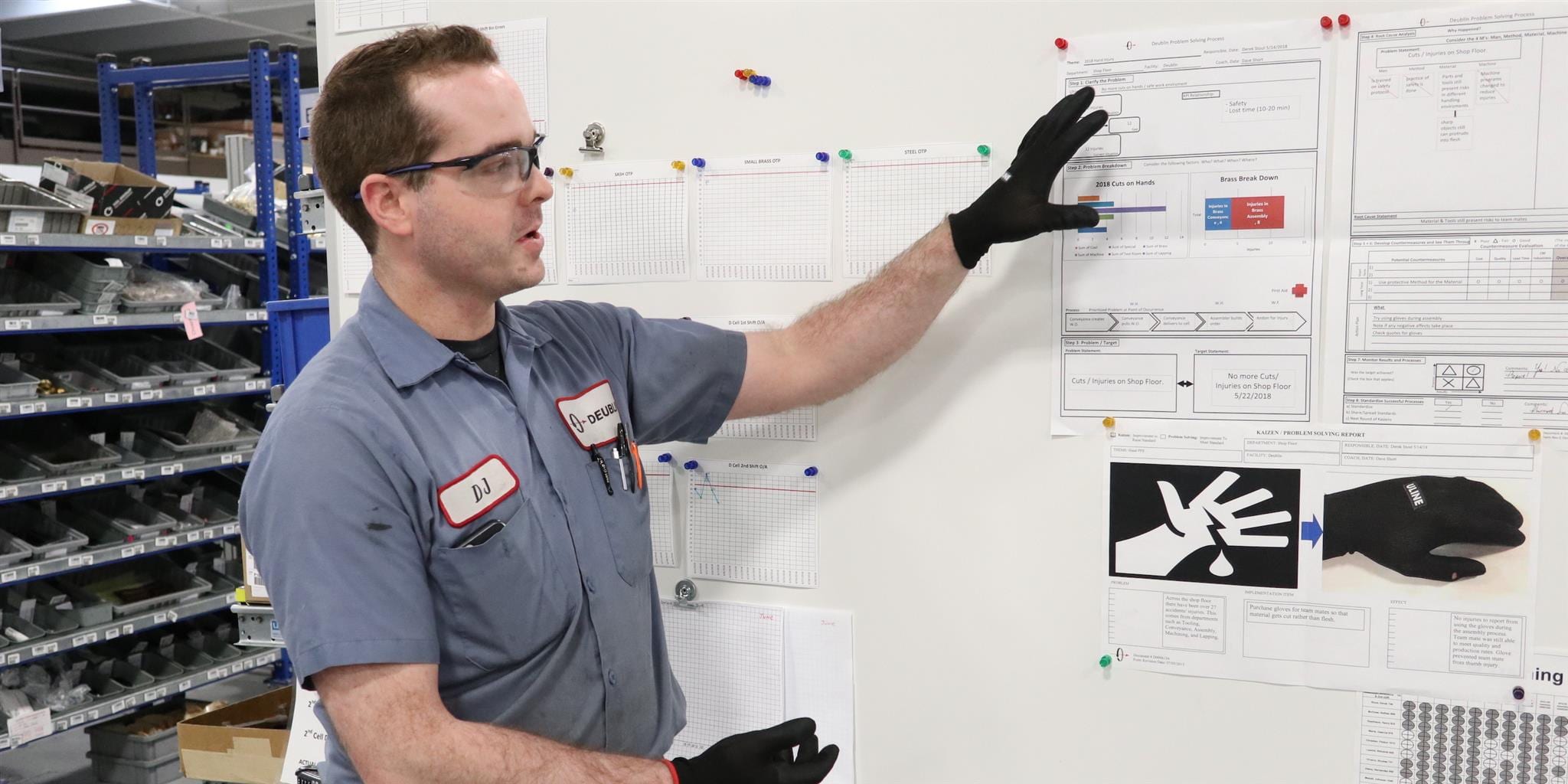
WOMACK’S YOKOTEN – The author visits a company that has sustained lean for a decade. In trying to understand how they did it, he finds how fundamentally the management system has changed.

FEATURE - The original TPS "house" had levelled production at its foundation because Toyota understood that establishing and sustaining continuous improvement is impossible without creating stability in production first. What about your transformation?
Read more

FEATURE – What is psychological safety? What is it not? This article explores its advantages and foundational elements, and how organizations need to transform their leadership to achieve this evolution in management.
WOMACK'S YOKOTEN - Every practitioner has encountered employee resistance to lean at some point. Here's a few tips on how to win over naysayers and perhaps even turn them into some of your biggest supporters.

NOTES FROM THE GEMBA – What’s kaizen for? Improving quality? Generating a flow of ideas? Challenging a method? All of the above, so long as the underlying goal is to make people’s lives easier.

FEATURE – In this intimate, moving account, the author shares her journey of personal transformation that caused her mindset and her attitude towards employees to dramatically change.