

"A story of personal awakening"
BOOK REVIEW - In the first of a series of Q&As on the recently published novel Lead With Respect by Freddy and Michael Ballé, Dan Jones explains why this book is a must-read.
Interviewee: Dan Jones, Chairman, Lean Enterprise Academy
Planet Lean: What do you think of Lead With Respect compared to Freddy and Michael's previous novels?
Dan Jones: The novels follow a logical sequence: The Gold Mine illustrates the core concepts of lean, The Lean Manager outlines the technical tasks of management, and Lead with Respect uncovers the human basis of lean. Actually until you read Lead with Respect you only half understand what lean is about. Lean is actually a path of personal and organizational learning and development that enables a very different way of working, by which everybody in an organization collaborates to create value.
PL: How do you think the novels "interact" with one another? Do they complement one another?
DJ: They can certainly be read in the sequence they were written in. However, I would now read this one first, after which you will get far more out of the previous two. Even if you don't normally read novels and prefer to learn lean from other kinds of books, you should try Lead with Respect. There are many other books on the first two topics but a novel is the ideal way to tell a story of personal awakening. And so far there is nothing else like it out there.
PL: What can lean practitioners expect to get from reading Lead With Respect?
DJ: You will be a bit uncomfortable as you reflect on the way you lead your colleagues. This is intentional, and necessary. Unless you change, instead of relying on others to do it for you, lean will wither and die. But you will race through this story in no time (it is just over 200 pages) and I doubt you will be the same when you are done. You will certainly have some "ah-ha moments” along the way. Whether you will have the courage to practice what you have learnt is up to you.
PL: What's the biggest misconception people have about the idea of "respect of people"? How does the book help to shed some light on the subject?
DJ: There has been a lot of confusion and misinformation about what "making people before making cars" actually means, on what engaging people is about or whether Taiichi Ohno was a tyrant, and so on. Engaging people is not just giving them the freedom to do their own thing or alternatively choosing the right incentives to get them to comply with a management system devised by experts. It is about leading by asking questions rather than telling people what to do.
PL: What do you think about the authors' choice to look at lean from the HR perspective?
DJ: It was the right thing to do and very necessary if the lean movement is to progress. It is a lot more than just looking at lean from an HR standpoint - it is about how people learn and how leaders learn from helping them to do so. Actually the underlying image of helping others to fulfil their potential is what brought many of us to lean in the first place.
THE INTERVIEWEE

Read more


FEATURE – The author discusses how the daily practice of lean thinking develops perseverance and the grit a leader needs to improve an organization.

FEATURE – At Malamulele Onward in Johannesburg, a do-it-yourself lean transformation is increasing the impact the nonprofit organization is having on South African children living with cerebral palsy.
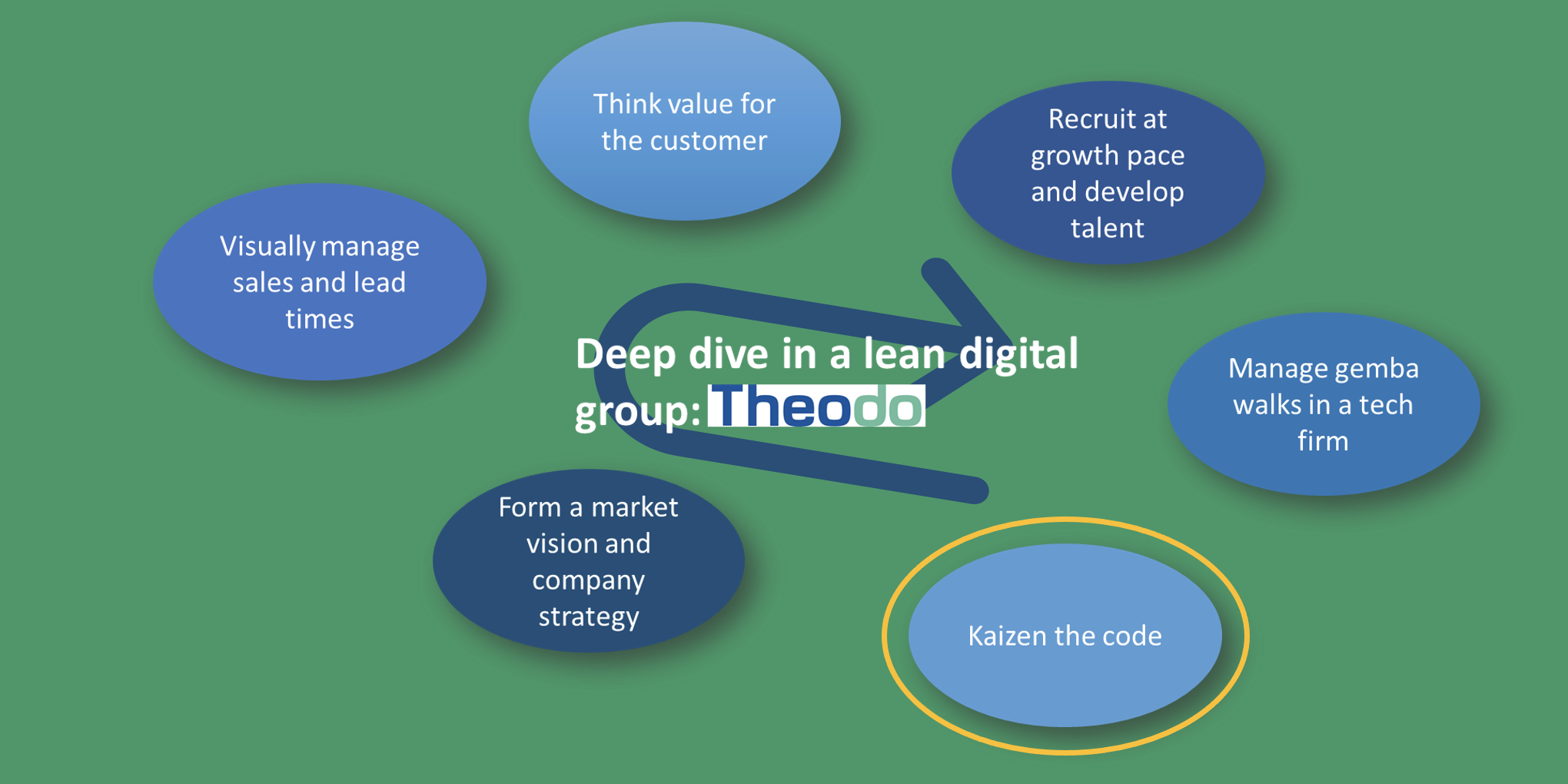
FEATURE – For a few years now, Theodo has made of quality and customer satisfaction the main focus of its work, and it is paying off. But what does it mean to pursue and improve quality at a digital company?

FEATURE – With the Covid-19 emergency, people across the world have been stockpiling on household products, exposing the shortcoming of batching-prone supply chains.