


Applying lean management principles to agriculture in Russia
INTERVIEW - Anton Ulanov is the CEO of one of the largest agricultural businesses in Russia. He talks with PL about the application of lean at Agroholding Kuban, discussing the wider challenges and opportunities for lean in agriculture.
Interviewee: Anton Ulanov, CEO, Agroholding Kuban
Planet Lean: Your example of applying lean in agriculture in very interesting. What are the opportunities for this industry in Russia?
Anton Ulanov: The potential for the application of lean in agriculture is huge, in every step of the value creation. It’s important to say that it is not the technical solutions that bring most benefits, but the idea of changing the culture and making people an active element of the production system.
PL: When it comes to lean, the tendency is to think about what other industries can learn from manufacturing. But what are the lean lessons that agriculture teaches us?
AU: In a way, the agricultural sector is a tougher environment in which to run a business than the automotive sector. Car making entails extremely complicated technical steps, but there are actually fewer external factors that affect the whole system. Agriculture has many more variables, and what other industries can learn from it is how to react fast to this broader range of factors influencing the production process. Think about the weather, for example. We can create a system to defend the plants from the elements, figuring out all the steps we require. We can decide what to do, how to do it and when to do it. And this is very similar to what you would see in an automotive shop floor. But then we take these procedures out to the fields, where there is no roof, we have to face a completely different reality: here it rained, here it didn’t rain; here you have more plants, here none grew. A lot more of the decisions must be taken at the gemba, due to the unpredictability of the situations we can find ourselves with. In an assembly facility, you can plan; in agriculture, every decision you make depends on external factors, on nature.
PL: When did you first encounter lean thinking?
AU: Before moving to Kuban Agroholding, I used to work for the financial department of the GAZ automobile assembly plant. That was around the time when the business started its transformation. I worked with costs all the time, trying to eliminate waste to reduce our costs. That was my first experience with lean. Later on, I took proper lean training, while playing a role - as financial head - in the transformation process at the car plant. All of my background is there.
Also, my basic education is technical engineering, which makes me naturally curious. The rest came from learning by doing and reflecting. More recently, I was appointed to take on the task of introducing lean at Kuban Agroholding. The Basic Element group has a CEO program to develop internal resources, and I was part of it in the early stages.
CONTINUE READING UNDER THE GALLERY
[widgetkit id=4]
PL: What problems were you trying to solve when you first introduced lean in Kuban Agroholding?
AU: One of the main opportunities I saw was introducing the time factor in the business processes. In agriculture, there is no such thing as structuring and measuring the work based on time. The other fundamental point is that, as any other sector, agriculture must be customer oriented. Kuban Agroholding wasn’t. All the processes and products complied to national standards, instead of matching the customers’ – which are of course much higher. First you need to understand the requirement, then you adapt your work to them. I also saw a lot of room for improvement in logistics. On the other hand, what I soon realized is that in the agricultural sector Russia is quite advanced. We need to catch up in automotive, for example, but the level of competency of our professionals in agriculture is extremely high. Therefore, Kuban’s specialists were already very familiar with the production process. Because of this, and because people are the core essence of our business, what we did at the Agroholding was implementing the management principles that lean provides us with.
{popup}

{/popup}
PL:What is the level of interest in lean in the Russian Federation?
AU: The interest is definitely growing. At the end of the day, lean is necessary. Russia is facing growing competition. We can try and build a competitive advantage in quality, product, cost, market, but eventually it all comes down to increased competition from both inside Russia and abroad. There is also a push coming from the government, which subsidizes certain products and encourages companies to be more efficient and reduce their energy consumption. This is an external incentive for companies to improve, even though it is not lean-specific.
However, I believe there is another type of push, coming from people. Human beings naturally want to improve. I see more and more managers around the country realizing this desire to improve. Lean is a tool to improve, and it’s not specific to anybody in the organization. It’s both top down and bottom up. It’s also a common language, for workers, middle management and top management. It’s one of the few subjects where all people can understand each other. In our case specifically, the whole project is supported by a private initiative: we are part of the Basic Element investment group, which is present in 27 out of 83 federal subjects in Russia. Its shareholder is very passionate about lean and gives all the encouragement that is needed.
PL: Do all the companies within the Basic Element group apply lean thinking?
AU: At least initially, this is a top down policy that is put forward throughout the group. It started in the automotive and aluminum businesses, and it is now expanding to financial services – an insurance company has recently started implementing lean thinking. At group level there is a special department, Production System Development, which is responsible for the developing the methodology and for transformation policies. It oversees the implementation of lean systems in the group. But without a doubt the personal involvement of the shareholder, echoed by the CEOs’, is fundamental.
PL: What role can events like the Lean Summit in Turkey, where you presented at the end of last year, play in helping to spread the word on lean in Russia?
AU: First of all, they represent an occasion to exchange experience. You arrive at these events with your own background and every time you listen to a presentation there is something about it that you can relate to your own experience as a manager.
Secondly, you can benchmark against others. Seeing the timeframe of different phases of lean implementation in different types of companies is critical to understand how we are doing and then discuss back home with people in the organization.
Thirdly, the summit is not built around promoting consulting services, but around providing a holistic view on different transformation processes.
THE INTERVIEWEE

Read more


FEATURE – The pandemic has brought back into the spotlight the common misconception that Just-in-Time causes disruption when spikes in demand occur. Torbjørn Netland debunks the myth.
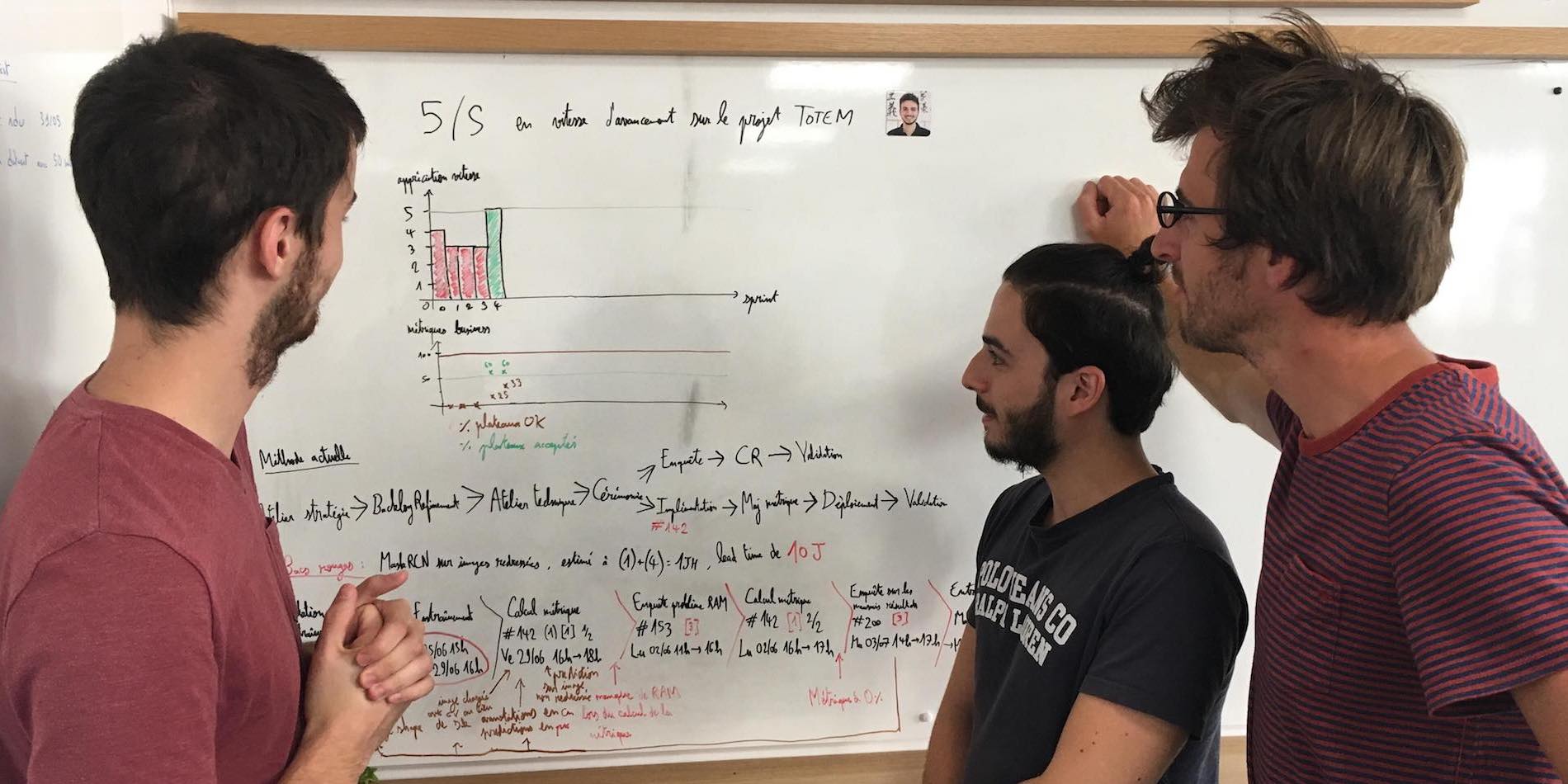
BUILDING BRIDGES - This month, we hear how addressing work-in-progress led a startup specialized in AI to productivity gains on their machine learning projects.

INTERVIEW - Are you a manager who needs to brush up on lean but has little time to do it? A new book by Cécile Roche comes to the rescue: A Little Lean Guide for the Use of Managers.

OPINION - If you have ever 5S-ed your daughter’s room or tried to bring one-piece flow to your grocery routine, this article on what lean management looks like in our personal lives is for you.