

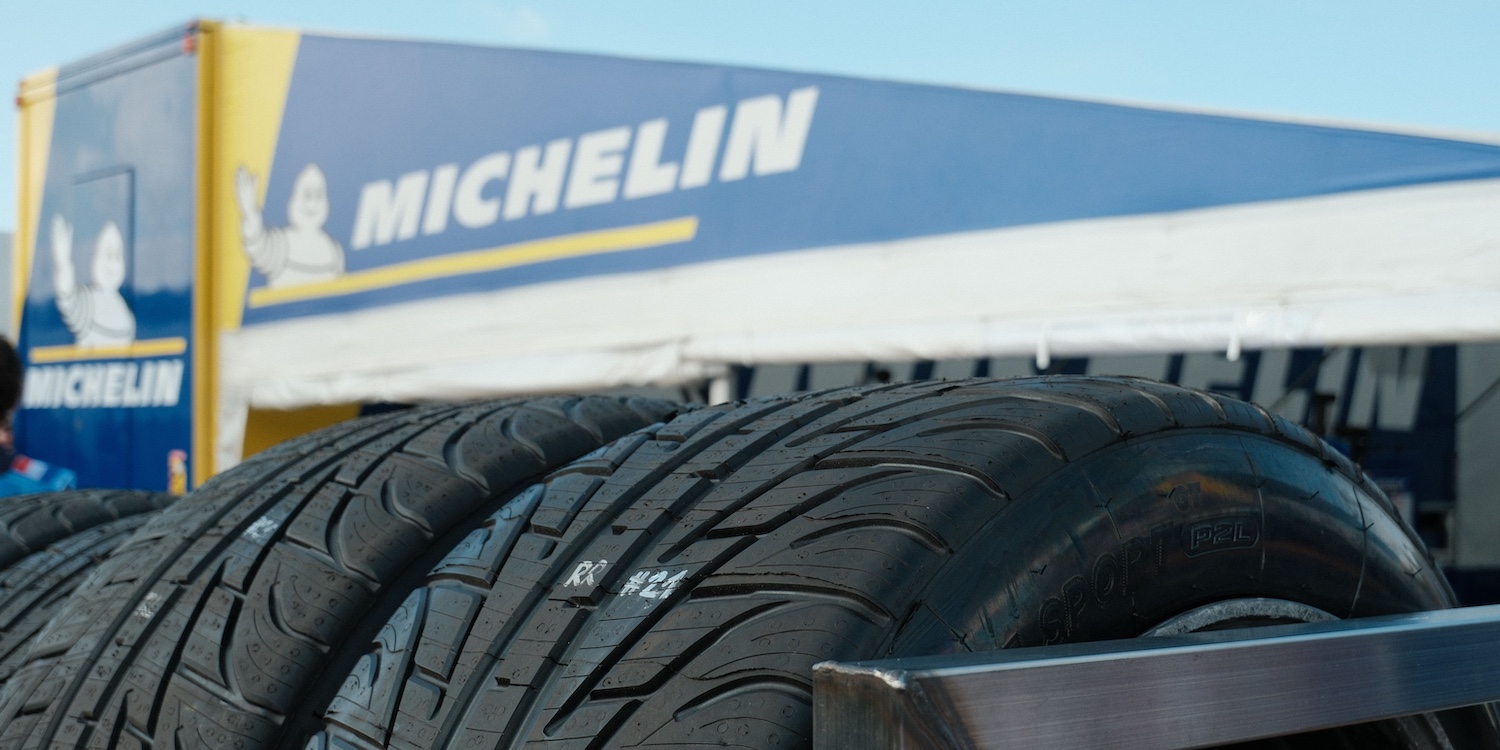
Michelin: developing problem-solving leaders
INTERVIEW – This conversation with a former Michelin senior leader explores how redefining managers as problem-solving coaches helped the company develop autonomous teams and sustain continuous improvement.
Interviewee: Jean-Christophe Guérin
Interviewer: Juan Ruiz with Roberto Priolo
For decades now, thousands of organizations have tried to embrace Lean Thinking. They've installed visual boards, introduced daily meetings, deployed metrics, and trained their leaders in problem solving. Yet very few have managed to build a management system capable of sustaining results over time and turning continuous improvement into a natural way of running the organization.
Why? Perhaps because the question was never which tools to use, but what a leader's real job should be.
Jean-Christophe Guérin devoted 38 years of his life to Michelin, sixteen of them as a member of the Executive Committee and global head of the company's industrial transformation. During that time, he led a change that began on the manufacturing floor but ended up extending to virtually every function in the organization.
It started when an executive decided to leave his office to work for three months as a manager on the shop floor. What he discovered there completely changed the way he understood management. Problems that HQ considered complex, strategic, or impossible to solve until the next product generation would disappear within hours once they were looked at alongside the people doing the work every day.
That discovery led Michelin to ask themselves a defining question: what is a manager's real responsibility?
The answer gave rise to a management system whose purpose stopped being to control the work and became something far more demanding: developing increasingly autonomous teams by helping people solve the problems they couldn't yet solve on their own.
In this conversation, Jean-Christophe Guérin explains how that system was born, how he managed to connect senior leadership with day-to-day operations, why he redefined the manager's role as someone in service of their team, and what principles allowed Michelin to develop autonomy without losing strategic alignment.
For me, the conversation Roberto Priolo and I had with Jean-Christophe carries special meaning. For more than a decade I had the privilege of working at Michelin, an organization I consider my great school of management. There, I learned a different approach to leadership, problem solving, and people development. Over time, I came to understand that many of the practices that shaped my professional life hadn't emerged by chance, but as the result of a system carefully built over years. Being able to return today to one of its main architects to understand the origin of these ideas is, at the same time, a learning exercise, an act of gratitude toward an organization that transformed the way I think and lead, and an opportunity to share with others an experience I still feel deeply proud of.
"The leader's job is not to direct the work. It's to develop people by solving problems."
THE INTERVIEW
Roberto Priolo: In your last role at Michelin, a company where you worked for 38 years, you were Global Industrial Director and led the company's industrial transformation process. Much of what you and your team developed in manufacturing ended up extending to every function of the company. But how did that journey begin?
Jean-Christophe Guérin: It all started in 2004, when I spent three months as a manager on the shop floor. There I discovered issues that my central team already knew about, but which we had classified as strategic or highly complex problems tied to tire design, solvable only in the next product generation.
Yet on the shop floor, those same problems were being solved with surprisingly simple solutions. That was a real shock to me.
I understood that the problem wasn't technical complexity. The problem was that there was a gap between the way the organization diagnosed problems centrally and the reality experienced by the people doing the work every day.
That discovery forced us to completely rethink how we managed our plants. We then launched a pilot with five factories — in France, Spain, Germany, Thailand, and the United States — led by volunteer plant managers who worked together for two years with a single goal: completely redesigning our management system.
We interviewed operators extensively, listened to their experiences, and inverted the organizational pyramid. We made performance metrics transparent and redefined the manager's role: their job would no longer be to control the work, but to help solve their team's problems.
During those two years, we experimented with new ways of tackling problems, developing people, and delegating responsibilities, and the results were extraordinary. Performance improved and people's engagement improved. But there was one moment that confirmed we were on the right path.
I remember asking an operator what he thought of all these changes. He answered: “What we've experienced has been like moving from shadow into light. Before, I had problems and didn't know what happened to them. Now, when I have a problem, I see the managers coming toward me to help.”
With that testimony I went to our CEO and said that we had to bring this system to all of Michelin.
We then gathered the 70 plant managers from around the world and set a very clear expectation: adopt the system and commit to it for two years. It wasn't negotiable, and by 2010 the worldwide rollout was complete. However, the real change wasn't in the tools we introduced, but in the new definition of the manager's job.
Juan Ruiz: How did you redefine the role of managers?
JCG: The first thing we did was tell every manager that their main mission was no longer to supervise the work, but to serve their team. From that moment on, managers began meeting regularly with their teams to ask a very simple question: “What problems do you have?”
We started to record their answers on cards. A green card means: “We have a problem, but we believe we can solve it ourselves.” The manager knew about the problem but didn't step in. A red card means: “Boss, we need your help.” At that point, the manager is expected to get involved. If they don’t have the authority, the skills, or the resources needed, the problem escalates to the next level, even up to the Executive Committee. When I was vice president, I received red cards every month and had to personally report what I had done to help resolve them.
But the system's purpose was never to escalate problems — it was to develop people. Every time a manager stepped in on a red card, they had to ask themselves an additional question: “Why did this team need my help?”
Solving the problem was only the first step; what really mattered was developing the team's capabilities so that, next time, they could solve that same problem without depending on their manager. Over time, red cards began to decrease — not because problems disappeared, but because the team's autonomy grew.
JR: Many organizations end up with leaders trapped in micromanagement or spending much of their time solving problems that aren't really theirs to solve. Is this how Michelin tackled that challenge?
JCG: Exactly. If a manager steps in on a problem marked with a green card, they're micromanaging. The team has already said they can solve it. But when a red card appears, the manager has a responsibility to get involved.
The difference is that their goal isn't to keep the problem for themselves, but to use that situation to develop the team — and that principle produced a result that still surprises many organizations today.
In our plants around the world, we no longer need shift managers at night or on weekends; the teams are autonomous enough to run operations. When I explain this, many people can't believe it.
RP: With greater autonomy, teams take on more responsibility and get more involved in how the process should run and how the company should behave. What's the biggest lesson you've learned from an operator?
JCG: In 2021, an operator named Jean-Michel Frixon retired after forty years at Michelin and wrote a book about his experience.
In it, he described how a good manager and a bad manager could create enormous differences in the performance of the same team, even working with exactly the same system: the same tools, the same red and green cards, the same machines, and the same shop floor.
Jean-Michel explained that when operators don't trust a manager, they find many small ways to resist. When they do trust them, they find many ways to help. The book contained some good chapters and others that were less favorable to Michelin. But we decided not to hide from it and treated it as an opportunity to learn.
I invited Jean-Michel to speak with our plant managers. After that session, one of them wrote to me: “That was the best leadership training we've ever received.”
Later he wrote a second book, The Operator Who Whispered to Managers, which got a lot of attention, partly because many people were surprised by how Michelin had reacted to the first book.
Today, Jean-Michel and I give talks together at hospitals, public institutions, large corporations, and small industrial companies.
What strikes people most is that, for the first time, they're hearing an operator talk about leadership. Normally they hear consultants, professors, or executives — never an operator — and his message is very simple: take care of your team, watch what they do, take the time to thank them. Leading isn't about running from meeting to meeting; it's about giving human time to your team.
JR: Systems like the green and red cards can also be understood as a way of developing leadership skills. Beyond that mechanism, what other practices did you implement to develop leaders within teams?
JCG: Many organizations, when they want to develop their teams' autonomy, identify the most ambitious operator and turn them into a team leader, delegating part of the work the manager used to do. Two years later, that person usually asks for a raise because they're now doing part of the manager's job.
In reality, all you've done is create a new hierarchical level and develop a single person. We took a different path.
Instead of concentrating new responsibilities in a single team leader, the manager began delegating specific responsibilities to different operators — one became responsible for safety skills development, another took on quality, another coordinated the vacation schedule, another tracked flow and inventory, another monitored energy consumption. Each operator had a concrete responsibility.
That way, leadership development stopped being concentrated in one person and became a responsibility shared across the whole team.
That's one of the reasons we can now operate without managers at night or on weekends, and there's something else: as Jean-Michel wrote in his book, operators respect a peer's recommendations far more than a manager's instructions.
By taking on these responsibilities, people develop their capabilities step by step, and over time, some of them naturally become excellent team leaders.
JR: What have you observed about the role leaders play across different cultures during a transformation?
JCG: Throughout my career I've had the chance to work with operators and teams in different parts of the world. And there's something I've observed with absolute clarity: people expect the same things, no matter where they are. They want their problems solved. They want clear goals and clear rules. They want opportunities to develop their skills and make decisions. They want to be involved when a problem affects them — at the very least, to be asked their opinion.
I've seen the same thing in a Chinese, Brazilian, French, or American operator. And across different generations too. Everyone expects the same thing: respect me. Help me solve my problems. Ask me what I think. Help me develop. Greet me. Thank me. In the end, those are the foundations of humanity.
RP: There's enormous enthusiasm around artificial intelligence right now. What has historically been Michelin's approach to new technologies?
JCG: Throughout my career I've seen many technological revolutions. Yet our way of adopting them has always been the same.
We start with pilot projects, let people get to know the new technology, use it, train on it, and learn from it. We carefully observe the results — sometimes for one, two, three, or even five years — and only then do we roll it out at scale.
That approach is sound because it ensures that the people who do the work (operators, technicians, and supervisors) accept the solution, provide feedback, and help improve it before it's extended to the rest of the organization.
For many years, robots could only repeat the same movement over and over again. Today, thanks to artificial intelligence, cameras, and image analysis, they're far more adaptable. At Michelin, we use a lot of AI, but always following the same principle: learn first, deploy after.
Many organizations believe a new technology will solve all their problems and implement it without first checking how it works. That can be very dangerous. The question isn't whether a technology works once. The question is whether it will work reliably 24 hours a day, seven days a week, 365 days a year and over many years.
It’s important to understand that digitization simplifies things, but it never replaces the human connection. For example, we have digitized our red card system but never broke that human connection: today a manager can get a digital notification when a red card appears, but they still have the responsibility to go personally to where the problem is happening to help solve it.
A SYSTEM THAT CONNECTS STRATEGY WITH OPERATIONS
A final comment from Juan Ruiz
Throughout this conversation, Jean-Christophe describes far more than a set of management practices. He describes a system designed to connect daily work with the responsibility of every level of leadership.
Red and green cards stop being a tool for managing problems and become the language through which the organization develops leaders, connects strategy with operations, and makes visible the barriers to value creation.
Perhaps that's the greatest lesson this conversation leaves us with: Michelin didn't build a system to control work better. It built a system to develop people capable of solving increasingly complex problems.
And so, even in the age of AI, the fundamental principle remains intact: the tools evolve, but the leader's job remains deeply human.
THE INTERVIEWEE
THE INTERVIEWER
Read more

INTERVIEW – Bringing nurses together and giving them a space to discuss problems on a regular basis has allowed this hospital in Holland to successfully embrace lean thinking and reap its benefits.

FEATURE – As she packs before leaving Botswana, the author tells us of a wonderful example of Lean Thinking that resurfaced from her past working in the Botswana tourism industry.

FEATURE – What role does packaging play when it comes to marketing a product? The author discusses “lean packaging” and shares the example of an Italian toilet paper maker.
FEATURE – In his first gemba walk in months, the author observes the Covid-19 vaccination process in a physician’s practice in Wales and reflects on how lean it is.
Read more
CASE STUDY – What is the approach to people development used at Volvo Cars? The authors explain how the organization has created a production system fully owned by operators and managers.
INTERVIEW – A Brazilian pilot examines the parallels between aviation and Lean, explaining how the "dark cockpit" philosophy focuses a captain’s attention on abnormalities to improve problem solving and decision making.
FEATURE – A lean management system is necessary to effectively run a business. Can Art Smalley’s four types of problems framework help such a system to focus on what’s really important?

FEATURE – Looking back on the lean journeys he's seen firsthand, the author concludes that a true lean transformation occurs when you establish lines of mentoring to the Thinking People System.