


Are CEOs the primary cause of failure of a lean transformation?
FEATURE – Lean transformations often fail because of well-intentioned CEOs undermining autonomy, mastery, and purpose. The author reminds us why leaders need change themselves first.
Words: Matteo Consagra
Lean transformations fail for many reasons—poor understanding of tools, organizational resistance, lack of resources. But there is one cause that recurs with surprising frequency and is rarely named explicitly: the behavior of the CEO.
This is not a question of bad intent or incompetence. The CEOs who launch lean transformations are almost always capable, determined, deeply motivated people. It is precisely that motivation which, paradoxically, becomes an obstacle.
In Drive, Daniel Pink identifies three fundamental elements of intrinsic motivation: autonomy, mastery, and purpose. Applied to the context of a lean transformation, these describe with precision the conditions an organization needs in order to genuinely change. They describe equally well how a CEO, acting in good faith, can erode each one.
- Autonomy: the delegation that doesn’t hold
The CEO delegates responsibility to their managers. When the lean transformation begins, things often don't move fast enough and results don't arrive as quickly as it was hoped. That’s when the CEO steps in. They decide directly. They bypass those they had delegated responsibility to, even with the best intentions—to unblock a situation, to accelerate a process, to set the right example.
The message that reaches the managers is unmistakable, however: the delegation wasn't real. When it really matters, the CEO decides. From that moment on, managers wait. They don't take initiative. They don't put themselves on the line. They wait to understand what the CEO wants, and then they execute.
A lean transformation requires exactly the opposite: people who experiment, who make mistakes, who learn. In an organization where autonomy has been taken away, this doesn't happen. And the CEO keeps doing more and more, wondering why no one is truly following.
- Stifling mastery
Einstein said that a problem cannot be solved with the same level of knowledge that generated it. The managers of a company undergoing a lean transformation often have solid technical skills and deep expertise. But they haven't been trained to lead change. They don't know how to develop people, how to coach, how to create an environment where mistakes are a source of learning rather than punishment.
This is not a personal failure—it is a systemic gap that the CEO must recognize and address. Instead, what often happens is that the CEO interprets the slowness of managers as a lack of willingness and responds by doing even more themselves.
Mastery doesn't develop if there is no space for it. That space is created—or destroyed—by the CEO. And when they destroy it, they get exactly what they feared: an organization that depends on them for every decision, incapable of moving on its own.
- Purpose: doing a lot doesn't mean doing the right things
The third trap is the most subtle. The work of a CEO in the middle of a transformation is often frantic—initiatives, projects, workshops, gemba walks (or genba, if we want to be more precise and use a spelling that's closer to the original Japanese pronunciation), steering meetings. It requires a lot of energy, which is why it’s important to ask, “Where is all of this going?”
If the organization's purpose, vision, mission, and strategy are not clearly defined—and communicated in a way that every person at every level understands what contribution is expected of them—all that energy dissipates. People will work hard, but they’ll move in different directions. They will optimize locally. They will solve problems that aren’t priorities.
Lean is not a set of tools to be applied just anywhere. It is a system that allows you to move in the right direction, eliminating what doesn't serve your purpose. But if the direction you follow isn't clear, Lean becomes efficiency for its own sake. And the organization will improve processes that perhaps shouldn't even exist.
THE HARDEST PART: CULTURE
Beyond Pink’s three elements, there is another dimension that deserves separate attention: organizational culture.
An organization's culture is more than the value stated by the company in its mission statement. It is shaped every day by the behaviors that leadership promotes, models, and above all tolerates.
If a CEO allows conflict avoidance rather than resolution, that will define the culture. If they allow problems to be hidden rather than surfaced, that will define the culture. If they promote those who bring good news rather than those who bring real problems, that will define the culture.
Developing culture is the longest, hardest, and most personal part of a lean transformation. It requires the CEO to change before anyone and anything else. Along the way, some will discover there is a conflict between their own purpose and that of the organization, or between their values and those the transformation requires.
When change is genuine, this kind of selection is inevitable. Accepting this is one of the most difficult acts of leadership a CEO can undertake. And almost no one is willing to do it until they are forced to.
PRACTICAL IMPLICATIONS
Recognizing these dynamics is not a theoretical exercise. It is the starting point for a different approach to lean transformation, one that has the development of the CEO's own leadership at its heart—treating it as a necessary condition rather than a nice-to-have variable.
A lean transformation that improves processes without developing people produces fragile results. Conversely, one that develops people—increasing their awareness, boosting their competences, and nurturing their ability to act autonomously—produces lasting change. The difference, in most cases, runs through the top of the organization.
THE AUTHOR

Read more


OPINION - What does it take to start a lean implementation? People often hesitate, blaming lack of preparedness at different management levels. Truth is, all you need is two front line people who are committed.
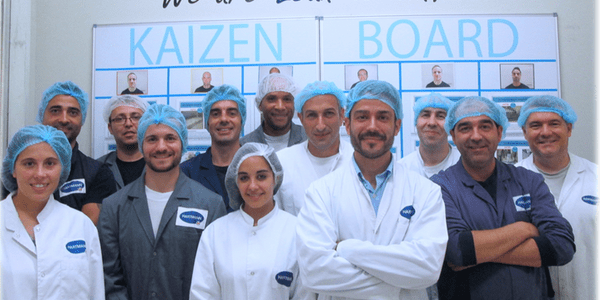
CASE STUDY - Through the involvement of front line staff, Hartmann’s production plant near Barcelona is paving the way for an expansion into different markets and inspiring the adoption of lean across the multinational.
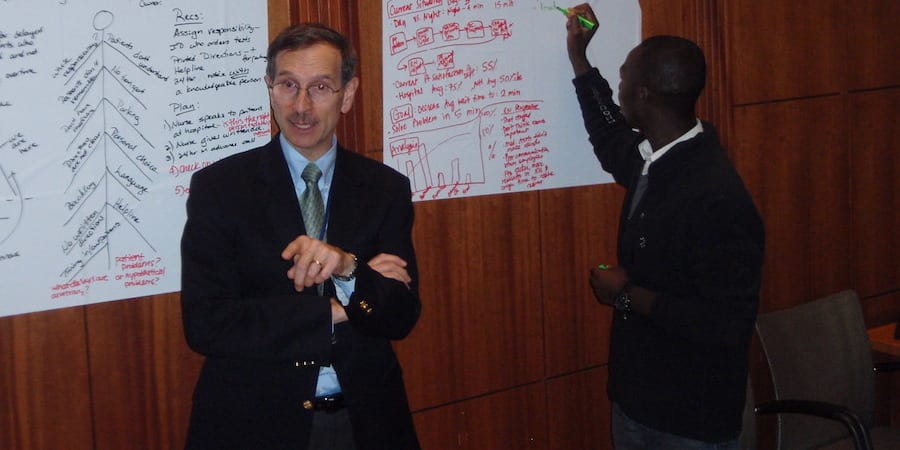
PROFILE – Another month, another inspiring profile of a lean practitioner. We were impressed by Dr Billi’s deep conviction in the idea that, first of all, leaders must be learners. You will be too.

FEATURE – For the last article of their series, the authors ask themselves the ultimate question: who wins at lean, and who loses? What makes change sustainable? Turns out, it’s all about the fundamentals.
Read more

SAVE THE DATE – Our editor introduces the theme of this year’s Lean Global Connection, which focuses on rethinking leadership to ensure our organizations can tackle daily issues while keeping an eye on their long-term strategy.

FEATURE – Philips has embarked in an ambitious development program for lean executives, which is helping the organization make substantial progress in their transformation.

FEATURE – Between hype and skepticism, understanding AI’s true capabilities is essential for leaders seeking to applyit meaningfully within their organizations.

INTERVIEW - What does "leading through incompetence" mean? Peter Willats discusses the role of leadership in a lean management system and the evolution of lean thinking.